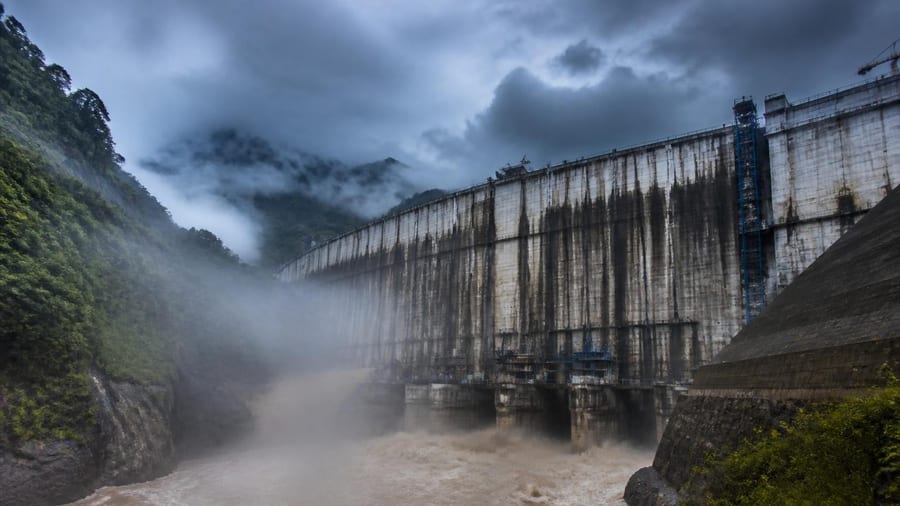
A tense race to control water is accelerating across South Asia. Bangladesh recently greenlit the Padma Barrage, a massive river-control project intended to address chronic drought in its southwestern region. Meanwhile, China is constructing the world's largest hydropower dam on the Brahmaputra River upstream, and India continues expanding its own network of dams. With the treaty governing Ganges water-sharing between India and Bangladesh set to expire in December 2026, the region faces a dangerous confluence of engineering ambition, environmental strain, and diplomatic uncertainty.
This flurry of uncoordinated infrastructure threatens to destabilize water security for hundreds of millions of people. The Ganges-Brahmaputra system drains the Himalayas and sustains some of the world's most densely populated areas. Yet no comprehensive multinational framework governs how these rivers should be shared. Instead, each nation is pursuing its own hydraulic agenda, often at the expense of downstream neighbors.
Why South Asia's Rivers Are Under Siege
The subcontinent's rivers have always been lifelines for agriculture, fisheries, and transportation. But climate variability, population growth, and rising energy demands have turned them into contested resources. India, China, Nepal, Bhutan, and Bangladesh all draw from the same river basins, yet coordination remains minimal.
India's Farakka Barrage, operational since the 1970s, diverts Ganges water toward Kolkata to maintain navigability at its port. Downstream in Bangladesh, the consequences have been severe: reduced river flow, increased salinity, declining fish populations, and widespread riverbank erosion. The Sundarbans mangrove forest—a UNESCO World Heritage Site and critical tiger habitat—has suffered elevated salt levels and tree die-off.
China's new dam on the Brahmaputra, known locally as the Yarlung Tsangpo, will generate 60 gigawatts of electricity, more than triple the capacity of the Three Gorges Dam. While Beijing insists the project is purely for energy, downstream nations fear it will give China unilateral control over river flows. India, already concerned about Chinese water management in Tibet, is accelerating its own dam projects on the same river.
The Padma Barrage: Solution or Catalyst?
Bangladesh's proposed barrage spans more than two kilometers across the Padma River, the main Ganges channel in the country. The design aims to store monsoon water and release it during the dry season, theoretically reducing salinity intrusion and reviving smaller tributary rivers in the southwest. Proponents argue it will support irrigation, boost rice and fish production, and stabilize communities displaced by environmental degradation.
However, the project raises significant concerns. The Ganges carries enormous volumes of sediment. When water slows behind a dam or barrage, it loses the energy to transport silt, which then accumulates upstream. This phenomenon has already caused over one million people to be displaced near the Farakka Barrage due to riverbank erosion and shifting channels.
- Increased sedimentation upstream of the new barrage could accelerate erosion and flood risk.
- Reduced sediment flow downstream may deprive deltas and coastal areas of natural replenishment, worsening subsidence and erosion.
- Altered flow regimes can disrupt fish migration, breeding cycles, and aquatic ecosystems.
- Large-scale water storage may intensify disputes with India over dry-season allocations.
Critics worry the barrage will not solve Bangladesh's water crisis but instead deepen regional mistrust. If each country builds infrastructure unilaterally, the cumulative effect could be catastrophic for the entire basin.
The Missing Framework for Cooperation
South Asia lacks the kind of robust transboundary water governance seen in other regions. The Mekong River Commission, for example, facilitates dialogue among Southeast Asian nations, though it too faces challenges. In contrast, the Ganges-Brahmaputra basin has no comparable institution.
The 1996 Ganges Water Sharing Treaty between India and Bangladesh was a landmark agreement, allocating dry-season flows based on need. But it expires in less than two years, and renewal is far from guaranteed. India has shown reluctance to expand the treaty's scope or include other riparian states. China, as an upstream power, has historically resisted multilateral water-sharing frameworks.
Without enforceable agreements, each dam becomes a strategic asset in a zero-sum contest, rather than a component of shared resource management.
The absence of a regional body means that environmental impact assessments, flood coordination, and drought management are handled piecemeal, if at all. This vacuum encourages nations to act in their immediate self-interest, often triggering retaliation from neighbors.
Environmental and Human Costs
The ecological toll of unchecked dam construction is already visible. The Sundarbans, straddling the India-Bangladesh border, are especially vulnerable. Mangroves depend on a delicate balance of freshwater and saltwater. When upstream dams reduce freshwater inflows, salinity rises, stressing vegetation and driving out species. The region is also a critical breeding ground for fish and a buffer against cyclones.
Farmers in Bangladesh's southwest report declining rice yields and difficulty accessing irrigation water. Fishing communities have seen traditional livelihoods evaporate as rivers shrink and fish stocks collapse. Many have migrated to cities or across borders, fueling urbanization pressures and social tensions.
India's northeastern states, which rely on the Brahmaputra, face similar risks. Chinese control over upstream flows could lead to sudden water releases or reductions, complicating flood forecasting and agricultural planning. Nepal and Bhutan, while smaller players, are also caught in the crossfire, balancing their own hydropower ambitions with downstream obligations.
Pathways to Stability
Averting a full-scale water crisis will require political will and institutional innovation. Several steps could reduce tensions and promote sustainable river management:
- Renew and expand the Ganges treaty: India and Bangladesh should negotiate a new agreement before the 2026 deadline, ideally incorporating dry-season flow guarantees and joint monitoring mechanisms.
- Establish a basin-wide commission: All riparian states—China, India, Nepal, Bhutan, and Bangladesh—should participate in a permanent forum for data sharing, dispute resolution, and coordinated planning.
- Invest in alternative water sources: Desalination, rainwater harvesting, and wastewater recycling can reduce pressure on rivers and diversify supply.
- Prioritize ecosystem health: Agreements should include minimum environmental flow standards to protect wetlands, fisheries, and biodiversity.
- Leverage international support: The World Bank, Asian Development Bank, and United Nations could facilitate dialogue and provide technical expertise.
Technology also offers tools for transparency. Satellite monitoring can track river flows, reservoir levels, and land-use changes in near-real time, making it harder for any country to conceal unilateral actions.
A Call for Regional Leadership
South Asia's rivers have sustained civilizations for millennia. Today, they are at a crossroads. The dam-building race may deliver short-term gains for individual nations, but it risks long-term instability for the region as a whole. Droughts, floods, displacement, and ecological degradation will not respect borders.
The Padma Barrage, China's Brahmaputra megaproject, and India's cascade of dams are symptoms of a deeper governance failure. Without binding commitments to share water equitably and protect ecosystems, each new project will feed suspicion and spur countermeasures. The region's leaders must choose between competitive escalation and cooperative stewardship.
This information does not replace advice from qualified hydrologists, environmental scientists, or policymakers. Readers should consult authoritative sources and experts when evaluating water management issues.