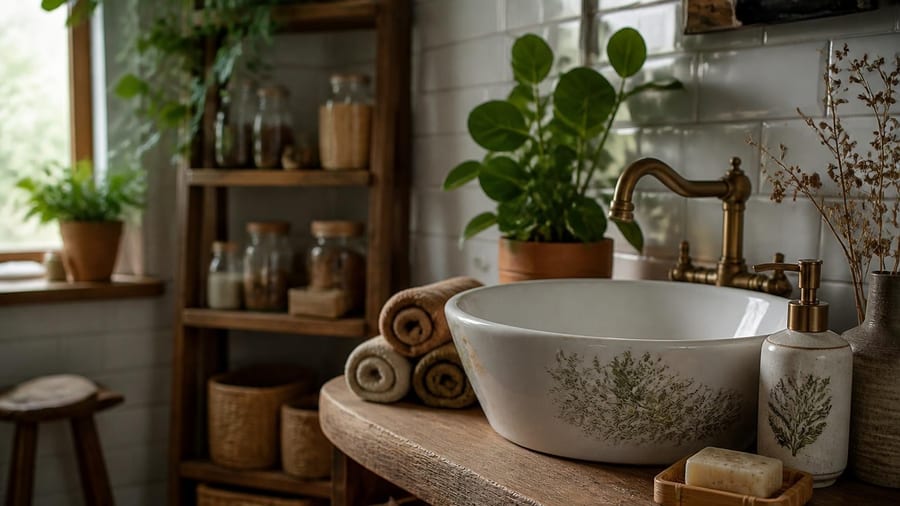
The American bathroom has evolved into a resource-intensive space, consuming an average of 17 gallons of water per person daily through toilet flushes, showers and faucet use alone. Meanwhile, plastic packaging from personal care products contributes millions of pounds of waste to landfills each year. The good news: strategic swaps and mindful choices can dramatically reduce your bathroom's environmental footprint without sacrificing comfort or hygiene.
From water-conserving fixtures to zero-waste toiletries, a sustainable bathroom reframe focuses on durability, minimal packaging and reduced consumption. Many of these changes pay for themselves through lower utility bills, while others simply redirect spending toward products designed to last years instead of weeks.
Rethinking Water Use at the Source
Water consumption in bathrooms represents the single largest opportunity for environmental impact reduction. The Environmental Protection Agency estimates that upgrading to WaterSense-labeled fixtures can save the average family nearly 13,000 gallons annually—enough to fill a backyard swimming pool.
Low-flow showerheads, which restrict output to 2.0 gallons per minute or less, deliver pressure without the volume. Modern aerators mix air into the stream, maintaining the sensation of a full shower while cutting water use by up to 40%. Installation requires only a wrench and ten minutes.
Dual-flush toilets offer a simple choice: a half-flush for liquid waste uses roughly 0.8 gallons, while a full flush consumes about 1.6 gallons—a stark contrast to older models that can use 3.5 to 7 gallons per flush. For renters or those avoiding a full fixture replacement, toilet tank displacement devices or fill-cycle diverters provide a budget-friendly alternative.
Ditching Single-Use Plastic in Personal Care
The personal care industry generates approximately 120 billion units of packaging annually, much of it non-recyclable. Bathrooms overflow with plastic pump bottles, disposable razors and individually wrapped products that serve their purpose for weeks before spending decades in a landfill.
Solid shampoo and conditioner bars eliminate the need for plastic bottles entirely, with each bar typically replacing two to three liquid bottles and lasting up to 80 washes.
Safety razors, constructed from stainless steel with replaceable blades, offer a lifetime alternative to disposable cartridge systems. While the initial investment ranges from $30 to $80, replacement blades cost pennies compared to multi-blade cartridge refills. The learning curve is brief, and the reduction in landfill waste is immediate.
Refill stations for hand soap, dish detergent and all-purpose cleaners are expanding across the United States, allowing consumers to reuse containers indefinitely. Many independent stores and a growing number of chains now offer bulk dispensers, cutting both packaging waste and transportation emissions associated with shipping water-heavy products.
Natural Fiber Alternatives
- Bamboo toilet paper breaks down more quickly than conventional wood-pulp varieties and grows without pesticides or fertilizers
- Organic cotton towels, particularly those with long-staple fibers, prove more absorbent and durable than synthetic blends
- Natural sea sponges or plant-based loofahs replace synthetic mesh poufs that shed microplastics with every use
- Hemp shower curtains offer a mildew-resistant, machine-washable option free from vinyl off-gassing
Cleaning Without Chemical Overload
Conventional bathroom cleaners frequently contain harsh chemicals—bleach, ammonia, synthetic fragrances—that persist in wastewater and affect aquatic ecosystems. Plant-based formulas using ingredients like citric acid, vinegar and essential oils achieve comparable results without the environmental burden.
For routine cleaning, a simple solution of white vinegar and water (1:1 ratio) tackles soap scum and hard water deposits. Baking soda serves as a gentle abrasive for scrubbing sinks and tubs. Castile soap diluted with water creates an effective all-purpose spray. These pantry staples cost a fraction of branded cleaners and arrive in minimal packaging.
Reusable cleaning cloths—whether cotton rags, cut-up old towels or purpose-made microfiber—eliminate paper towel waste. A dedicated set for bathroom use, laundered weekly, handles every surface without introducing single-use products into your routine.
Secondhand Fixtures and Timeless Design
The embodied carbon in bathroom fixtures—the emissions generated during manufacturing and transportation—represents a significant environmental cost. Sourcing vintage or salvaged sinks, bathtubs, faucets and tile sidesteps this impact while often delivering superior craftsmanship.
Cast-iron tubs from the early 20th century, when properly re-enameled, outlast modern acrylic models by decades. Porcelain pedestal sinks offer timeless style and require no vanity cabinet, reducing material use. Architectural salvage yards, online marketplaces and estate sales yield surprising finds, from Art Deco medicine cabinets to mid-century tile in excellent condition.
| Fixture Type | New Production Impact | Salvage Advantage |
|---|---|---|
| Cast-iron bathtub | High embodied carbon from raw material extraction and casting | Zero new manufacturing; re-enameling extends lifespan 50+ years |
| Porcelain sink | Energy-intensive firing process | Durable material survives decades; readily available secondhand |
| Brass faucets | Mining and refining processes | Repairable components; classic designs avoid trend obsolescence |
When purchasing new becomes necessary, prioritize brands offering repair parts and warranties exceeding ten years. Avoid trendy finishes or styles likely to feel dated within a few seasons; classic designs reduce the temptation to renovate prematurely.
Small Swaps With Outsized Impact
Not every sustainable bathroom upgrade requires demolition or significant investment. Incremental changes accumulate meaningful results over months and years.
- Switch to bamboo or wooden toothbrushes with compostable handles
- Choose toilet paper made from recycled content or rapidly renewable fibers
- Install a low-flow aerator on every faucet (typical cost: under $10 each)
- Replace incandescent or CFL bulbs with LED options for lighting that lasts years
- Use bar soap instead of liquid soap in plastic pumps
- Select unbleached, chlorine-free paper products when disposables are necessary
Energy consumption for water heating represents another opportunity. Lowering your water heater thermostat to 120°F reduces energy use without compromising comfort for most households. Insulating hot water pipes minimizes heat loss during transport from heater to faucet.
Building a Maintenance-First Mindset
Sustainability extends beyond purchasing decisions to how we maintain and repair what we own. A well-cared-for bathroom requires fewer replacements, generating less waste over time.
Address leaks immediately—a faucet dripping once per second wastes more than 3,000 gallons annually. Clean fixtures regularly to prevent mineral buildup that degrades seals and finishes. Re-caulk joints as needed to prevent water damage that necessitates premature replacement of surrounding materials.
When items do reach end-of-life, investigate recycling options. Many municipalities accept metal faucets and fixtures in scrap metal programs. Ceramic toilets and sinks, while not recyclable through curbside programs, can sometimes be repurposed by community organizations or artists.
This information does not replace advice from a qualified professional. For plumbing modifications or water quality concerns, consult a licensed contractor or your local water utility.