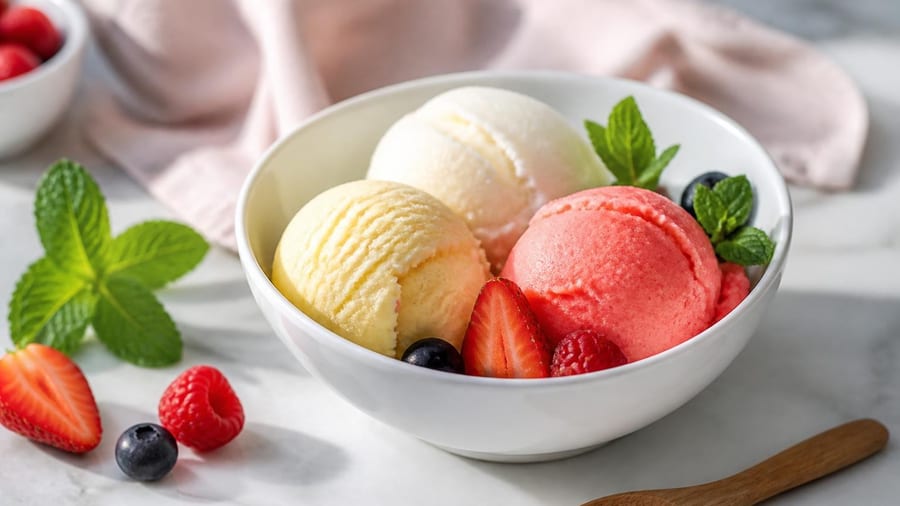
The afternoon heat settles in, and the craving arrives—something cold, sweet, creamy. For women managing polycystic ovary syndrome (PCOS), that familiar pull toward frozen desserts carries added complexity. The decision between kulfi, gelato, soft serve, or sorbet isn't just about taste preference; it's a metabolic calculation that affects blood sugar, hormone balance, and inflammation.
Understanding which frozen treat aligns with PCOS management requires looking beyond calories at the complete nutritional architecture of each option. The interplay of protein, fat, sugar absorption rates, and ingredient quality determines how your body responds—particularly when insulin resistance is part of the equation.
The Metabolic Reality Behind Summer Cravings
Heat-driven dessert cravings have physiological roots. When ambient temperature rises, the body activates cooling mechanisms that include seeking cold foods. Mild dehydration from perspiration triggers cravings for quick-energy foods, typically sweet items that promise rapid glucose delivery.
For women with PCOS, this biological response intersects with existing metabolic challenges. Insulin resistance—present in 50-70% of PCOS cases—means cells respond poorly to insulin, leading to elevated blood sugar and compensatory insulin surges. These hormonal fluctuations intensify cravings, particularly during the luteal phase of the menstrual cycle when progesterone peaks and cortisol sensitivity increases.
The craving isn't weakness; it's the body attempting to regulate temperature and energy. The challenge lies in satisfying that drive without triggering blood sugar spikes that worsen PCOS symptoms.
Breaking Down Four Popular Frozen Desserts
Each frozen dessert presents a distinct nutritional profile that interacts differently with PCOS metabolism:
Kulfi: Traditional Dairy Concentration
This South Asian frozen dessert uses whole milk slowly reduced to concentrate milk solids, combined with nuts, cardamom, and sugar. The extended cooking process evaporates water, leaving behind higher protein and calcium content than standard ice cream. A typical serving contains approximately 200-250 calories, 8-10 grams of fat, and 6-8 grams of protein.
The protein and fat content slow sugar absorption, preventing the rapid glucose spike that sorbet or soft serve might trigger. However, traditional kulfi still carries significant sugar load—often 20-25 grams per serving.
Gelato: Italian Intensity
Gelato contains less cream and fewer egg yolks than American-style ice cream, resulting in lower fat content (typically 4-8% compared to ice cream's 14-18%). It's churned more slowly, incorporating less air, which creates denser texture and more concentrated flavor.
This density means smaller portions deliver satisfying taste, potentially supporting portion control. Yet gelato often contains comparable or higher sugar than ice cream—18-24 grams per half-cup—to compensate for reduced fat.
Soft Serve: Aerated Convenience
Soft serve incorporates significant air during production, sometimes comprising 30-60% of total volume. This aeration lowers fat and calorie density compared to hard ice cream. A half-cup serving typically provides 110-150 calories and 3-6 grams of fat.
The catch: commercial soft serve relies heavily on stabilizers, emulsifiers, and artificial flavoring to maintain texture and taste. Many formulations use high-fructose corn syrup or other processed sugars that may trigger stronger insulin responses than whole-ingredient alternatives.
Sorbet: The Dairy-Free Option
Sorbet contains no dairy—just fruit puree, water, and sugar. This makes it naturally low in fat and appealing to those avoiding lactose. However, the absence of protein and fat means nothing slows sugar absorption. A typical serving delivers 100-120 calories but 25-30 grams of rapidly absorbed sugar.
For insulin-resistant individuals, sorbet can trigger the sharpest blood sugar spike of the four options, followed by a corresponding crash that reignites cravings within hours.
The best frozen dessert for PCOS management isn't the lowest-calorie option—it's the one that balances macronutrients to prevent blood sugar volatility while delivering genuine satisfaction.
Which Option Supports PCOS Management?
When evaluating frozen desserts through a PCOS lens, three factors matter most: glycemic impact, inflammatory potential, and satiety.
| Dessert Type | Protein Content | Fat Content | Sugar Absorption Rate | PCOS Compatibility |
|---|---|---|---|---|
| Kulfi | Moderate-High | Moderate-High | Slow | Good |
| Gelato | Low-Moderate | Low-Moderate | Moderate | Fair |
| Soft Serve | Low | Low | Fast | Poor |
| Sorbet | None | None | Very Fast | Poor |
Kulfi emerges as the most metabolically friendly option for women with PCOS, primarily due to its protein and fat content buffering sugar absorption. The inclusion of nuts adds healthy fats and additional protein, further moderating glycemic response.
Gelato occupies middle ground—better than soft serve or sorbet, but requiring careful portion control given its sugar concentration. Choosing gelato made with whole ingredients rather than stabilizers and choosing flavors without added candy or cookie mix-ins improves its profile.
Soft serve and sorbet present the greatest challenges. Both deliver sugar rapidly with minimal nutritional benefit, creating the blood sugar rollercoaster that exacerbates PCOS symptoms.
Practical Strategies for Smart Indulgence
Managing PCOS doesn't require eliminating frozen desserts; it requires strategic choices that minimize metabolic disruption:
- Pair with protein or fat: If choosing sorbet or gelato, eat it after a meal containing protein and healthy fats, or add nuts on top to slow sugar absorption.
- Watch portion size: Use a small bowl rather than eating from the container. A half-cup serving satisfies the craving without overwhelming insulin response.
- Choose whole ingredients: Artisanal versions made with real cream, milk, and minimal additives create less inflammatory response than highly processed commercial products.
- Time it strategically: Consume frozen desserts earlier in the day when insulin sensitivity tends to be higher, rather than as a late-night snack when metabolic function slows.
- Monitor your response: Track how different options affect your energy, cravings, and cycle regularity. Individual insulin sensitivity varies significantly.
Beyond the Scoop: Homemade Alternatives
Making frozen desserts at home provides complete control over ingredients and sugar content. Blending frozen bananas with cocoa powder and nut butter creates a whole-food alternative with natural sweetness, fiber, and healthy fats. Greek yogurt-based frozen treats offer high protein content that traditional options lack.
Adding cinnamon, which may improve insulin sensitivity, or using almond milk as a base reduces the glycemic load while maintaining satisfying texture. These modifications transform frozen desserts from metabolic challenges into genuinely nourishing treats.
This information does not replace advice from a qualified healthcare professional. Women with PCOS should consult their physician or registered dietitian to develop personalized nutrition strategies that address their specific metabolic profile and health goals.