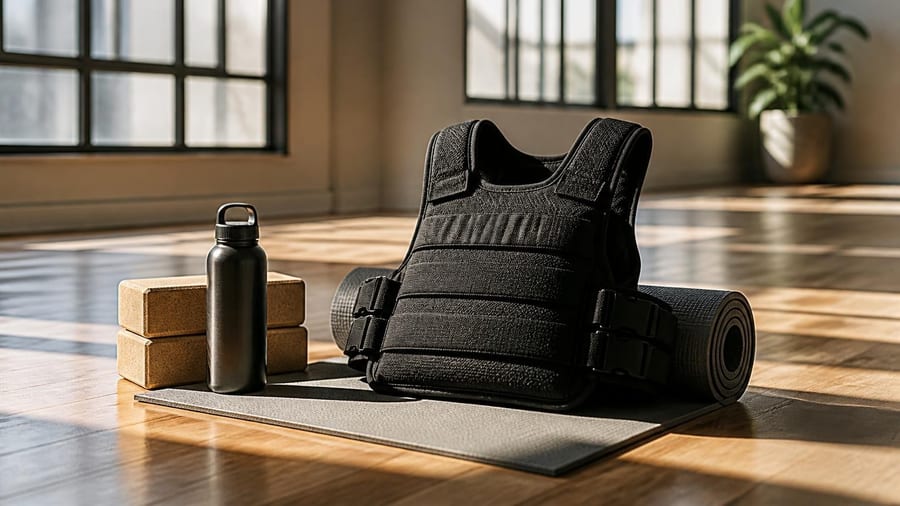
Yoga has long been celebrated for building flexibility, reducing stress and improving posture. But what happens when you add external resistance to familiar flows? After integrating a weighted vest into my practice for two weeks, I noticed measurable shifts in how my muscles worked, how my balance responded and even how my attention sharpened during each session.
Weighted vests—originally used in military training and now popular in running and calisthenics—deliver resistance evenly across the torso. When applied to yoga, that load transforms bodyweight poses into strength challenges, demanding greater core engagement and proprioceptive awareness. The result is a hybrid practice that bridges the gap between traditional asana and functional fitness.
Why Add Weight to Yoga?
Traditional yoga relies on gravity and body positioning to create intensity. A downward-facing dog or warrior pose asks muscles to stabilize joints and hold alignment. A weighted vest amplifies these demands without requiring new equipment beyond a single, adjustable piece of gear that typically ranges from 5 to 20 pounds.
The principle is progressive overload: by gradually increasing resistance, muscles adapt and grow stronger. Applied to yoga, this means deeper activation in the legs during lunges, heightened shoulder stability in planks and more deliberate core bracing in twists. Unlike dumbbells or kettlebells, a vest keeps hands free and weight symmetrical, preserving the flow-based nature of vinyasa or hatha sequences.
Research into resistance training shows that even modest loads can improve muscular endurance and bone density. A 2021 study published in the Journal of Strength and Conditioning Research found that adding 10% of body weight during functional movements significantly increased lower-body force production. While yoga is not resistance training in the conventional sense, the same biomechanical principles apply when poses demand sustained muscle contraction under load.
Immediate Changes in Strength and Muscle Activation
Within the first week, familiar poses felt dramatically different. Chair pose—typically a thigh burner—became a full-body challenge as the vest pulled my center of gravity lower, forcing quads and glutes to fire more intensely. Planks required tighter abdominal bracing to prevent sagging, while chaturanga demanded greater pectoral and tricep engagement to control descent.
- Increased time under tension in holding poses
- Heightened activation of stabilizer muscles around joints
- Greater awareness of alignment to avoid compensatory movements
- Noticeable fatigue after 30-minute sessions that previously felt moderate
The vest also revealed imbalances. During tree pose on my left leg, I wobbled more than on my right, signaling weaker ankle and hip stabilizers. The added weight magnified these asymmetries, turning each session into a diagnostic tool as much as a workout.
Balance and Proprioception Under Load
Balance in yoga depends on proprioception—the body's ability to sense its position in space. A weighted vest shifts the body's center of mass downward and forward, requiring constant micro-adjustments. Standing poses like warrior III and half-moon became exercises in real-time recalibration.
After two weeks, I noticed improved steadiness even without the vest. This adaptation likely stems from enhanced neuromuscular coordination: the nervous system learns to recruit stabilizers more efficiently when challenged. A 2019 study in Gait & Posture showed that training with external loads improved balance performance in older adults, suggesting that resistance-based proprioceptive training has cross-over benefits.
| Pose | Traditional Challenge | With Weighted Vest |
|---|---|---|
| Tree Pose | Hip and ankle stability | Increased demand on foot arch, lateral glutes |
| Warrior III | Core engagement, hamstring flexibility | Greater spinal erector activation, deeper hip hinge |
| Crow Pose | Wrist strength, abdominal compression | Heightened shoulder girdle load, slower entry |
Mental Focus and Mindfulness Amplified
Yoga is as much a mental practice as a physical one. The vest introduced a new layer of attentional demand. Each movement required deliberate pacing; rushing through transitions risked losing balance or straining joints under the added load. This forced a slower, more methodical approach—closer to the meditative roots of classical yoga.
When every breath and shift in weight matters, distraction becomes impossible. The vest demanded presence in a way that lighter flows sometimes allow the mind to wander.
This heightened focus extended beyond the mat. In daily activities, I found myself more aware of posture and movement quality, a carryover effect that researchers call motor learning transfer. The cognitive effort required to manage load during yoga appeared to sharpen kinesthetic awareness throughout the day.
Practical Considerations and Safety
Not every pose benefits from added weight. Inversions like headstands or shoulder stands place significant load on the cervical spine and should be avoided with a vest. Deep backbends may compress the lumbar region excessively. I limited vest use to standing sequences, planks, lunges and seated twists—poses where resistance enhances rather than endangers.
Starting light is essential. I began with a 5-pound vest and increased to 10 pounds in the second week. Jumping to heavy loads risks joint strain, especially in the knees and wrists. Proper vest fit is also critical; loose straps allow the weight to bounce, disrupting balance and irritating shoulders.
- Choose a vest with adjustable straps and evenly distributed pockets
- Begin with 5-10% of your body weight
- Focus on controlled movements; avoid dynamic jumps or rapid transitions
- Listen to joint feedback—dull aches signal overload
- Pair vest sessions with traditional yoga to maintain flexibility
This information does not replace advice from a qualified fitness professional or healthcare provider. Individuals with joint conditions, osteoporosis or balance disorders should consult a specialist before adding resistance to movement practices.
A Tool for Progressive Practice
After two weeks, the weighted vest proved to be more than a novelty. It offered a path to deepen strength without abandoning the mindful, breath-centered framework of yoga. Muscle soreness in the glutes, shoulders and core confirmed that the body was adapting to new stimuli, while improved steadiness in balancing poses suggested neuromuscular gains.
This approach is not for everyone. Purists may argue that adding weight contradicts yoga's philosophy of ease and non-striving. Yet for practitioners seeking to bridge flexibility and strength—or plateau in traditional flows—a vest provides measurable, accessible progression. The key is integration, not replacement: alternating weighted sessions with unweighted practice preserves range of motion while building resilience.
Ultimately, the vest became a teacher. It exposed weak links, demanded patience and rewarded attention. In an era where fitness trends often prioritize intensity over intelligence, weighted yoga offers a middle path—challenging the body while honoring the contemplative heart of the practice.