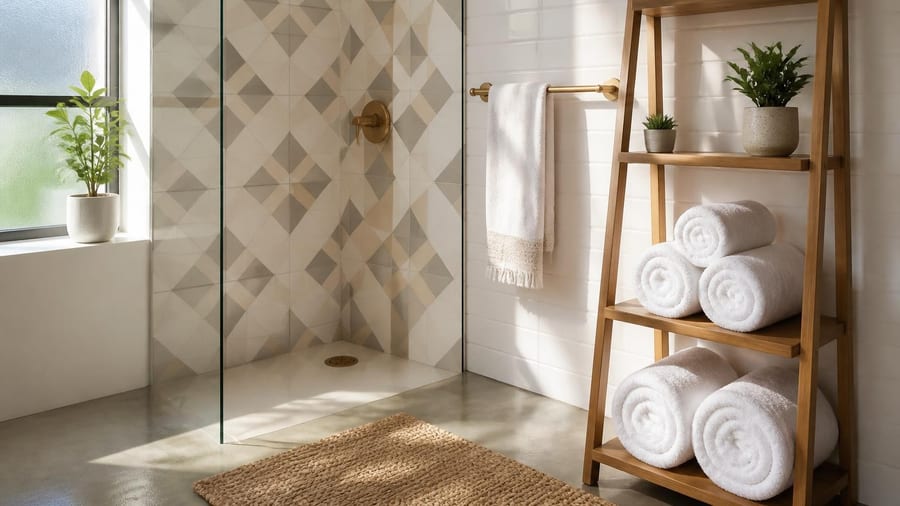
Rental bathrooms often rank among the most dated, least inspiring spaces in an apartment. Beige tile from the 1990s, yellowing grout, and builder-grade fixtures are standard fare. But a growing number of renters are proving that a stunning transformation doesn't require a landlord's approval or a contractor's invoice. With just $125 and a weekend, it's possible to create a bathroom that rivals custom renovations—while keeping every change completely reversible.
The secret lies in an arsenal of removable products that have flooded the market in recent years, coupled with strategic design choices that maximize visual impact per dollar spent. From peel-and-stick tile to temporary wallpaper, these solutions allow renters to express personal style without forfeiting their security deposit.
Why Temporary Bathroom Upgrades Make Financial Sense
The average professional bathroom remodel costs between $6,600 and $16,700 according to national data, placing it firmly out of reach for most renters. Even minor updates like new fixtures or tile work typically require landlord permission and may not be recouped when moving out. Temporary makeovers flip this equation entirely.
Removable materials offer several distinct advantages for renters. First, they preserve the original surfaces underneath, eliminating conflict with lease agreements. Second, they're portable—many renters take their peel-and-stick tile or vinyl flooring to the next apartment. Third, mistakes cost pennies to fix compared to permanent installation errors. A misaligned section of adhesive tile can be peeled up and repositioned; a poorly grouted permanent tile requires demolition.
The psychological impact shouldn't be underestimated either. Housing studies suggest that personalized living spaces contribute to tenant satisfaction and mental well-being, even in temporary housing. When renters can't modify the structure, modifying the finish becomes essential for feeling at home.
The Strategic Foundation of a Budget Transformation
Successful low-cost makeovers begin with a clear priority list. In bathrooms, three elements command the most visual attention: walls, floors, and vanity areas. Addressing even one of these zones creates dramatic change; tackling two or three for under $125 requires smart shopping and focused execution.
The fastest way to change a room's character is to change its largest surfaces. In a small bathroom, that means walls and floors deliver the biggest return on investment.
Begin by measuring carefully. Most bathroom floors measure between 35 and 45 square feet, while wall space varies but typically ranges from 100 to 150 square feet in a standard 5-by-8-foot bathroom. Peel-and-stick vinyl tile costs approximately $1 to $3 per square foot at major home improvement retailers, meaning a complete floor can be covered for $35 to $135. Removable wallpaper runs slightly higher at $2 to $5 per square foot, but accent walls require less coverage.
Color theory plays a crucial role when working within tight budgets. Lighter shades make small bathrooms feel larger, while a single bold accent wall creates depth without overwhelming the space. Cool tones like sage green, soft blue, or charcoal gray photograph beautifully and pair well with standard white fixtures that most rentals include.
The Essential Materials and Where to Source Them
A complete temporary bathroom makeover typically draws from the following toolkit:
- Peel-and-stick vinyl tile or luxury vinyl planks for floors
- Removable wallpaper or contact paper for walls
- Adhesive tile decals for existing ceramic tile
- Command strips and damage-free hanging hardware
- Peel-and-stick backsplash panels for vanity areas
- Temporary caulk or trim strips to finish edges
Big-box retailers like Home Depot and Lowe's stock extensive selections of removable flooring and wallpaper. Online marketplaces offer even broader style options, though shipping costs must be factored into budget calculations. Dollar stores and discount retailers increasingly carry contact paper and adhesive shelf liner that can substitute for pricier wallpaper on small accent areas.
Quality varies significantly across price points. Professional designers recommend ordering samples before committing to large quantities, particularly for peel-and-stick tile. Some budget options have weak adhesive that fails in humid environments—a critical consideration for bathrooms. User reviews often flag durability issues before they become expensive mistakes.
Step-by-Step Installation for Lasting Results
Surface preparation determines whether a temporary installation lasts six months or six years. Clean all surfaces thoroughly with a degreasing cleaner, then wipe with rubbing alcohol to remove any residue. Allow surfaces to dry completely—moisture trapped under adhesive products leads to mold and premature failure.
For floor installations, start in the corner farthest from the door and work toward the exit. This prevents you from stepping on newly laid tile and ensures pattern alignment remains consistent. Most peel-and-stick products allow repositioning within the first few minutes, so work methodically rather than rushing.
Wall applications benefit from a helper. One person holds the roll or panel while the other smooths from center to edges, eliminating air bubbles. A plastic squeegee or credit card wrapped in a soft cloth prevents surface scratching while ensuring firm adhesion. For corners and obstacles like toilet flanges, create paper templates first to minimize waste.
Finishing touches separate amateur work from professional results. Edge trim strips conceal cut edges along baseboards and door frames. Matching or complementary caulk (removable varieties exist) fills gaps between surfaces. These details cost under $20 total but elevate the overall appearance substantially.
Common Pitfalls and How to Avoid Them
The most frequent mistake renters make is underestimating material quantities. Always purchase 10-15% more than calculated square footage to account for cuts, pattern matching, and future repairs. Most retailers accept returns of unopened packages, making it safer to overbuy than to run short mid-project.
Bathroom humidity poses unique challenges for adhesive products. Even high-quality removable materials can lift in persistently damp conditions. Running the exhaust fan during and after showers, using a dehumidifier, or cracking a window dramatically extends installation lifespan. Some renters apply a thin bead of removable caulk along floor tile edges in splash zones for extra insurance.
| Challenge | Prevention Strategy | Approximate Cost |
|---|---|---|
| Weak adhesion | Clean surfaces with alcohol; ensure complete drying | $5 (cleaning supplies) |
| Humidity damage | Use exhaust fan; apply edge caulk in wet zones | $8 (removable caulk) |
| Pattern misalignment | Dry-lay first row before adhering; use level | $12 (basic level) |
Removal is the final test of any temporary installation. Most quality products peel away cleanly when pulled slowly at a 45-degree angle. A hairdryer softens stubborn adhesive, making removal easier and reducing the risk of paint damage. Any residual glue typically dissolves with rubbing alcohol or adhesive remover, both available for under $5.
The Broader Trend Toward Renter Empowerment
The explosion of temporary design solutions reflects a larger shift in American rental markets. With 36% of US households renting according to recent Census Bureau data, and median rental duration stretching beyond three years in many metro areas, renters increasingly demand the ability to personalize their spaces. Manufacturers have responded with product lines specifically targeting this demographic.
Social media has accelerated this trend. Platforms like Instagram and Pinterest showcase dramatic before-and-after transformations, inspiring renters who previously assumed they were stuck with landlord choices. Hashtags like #renterfriendly and #rentalreno generate millions of impressions, creating communities where tips and product recommendations spread rapidly.
The financial accessibility of these projects democratizes good design. A renter earning median income can achieve results that once required five-figure budgets and professional installation. This shift challenges the traditional assumption that beautiful, personalized spaces are the exclusive province of homeowners.
This information about home improvement projects does not replace advice from qualified contractors or property management professionals. Always review your lease agreement before making modifications to a rental property.