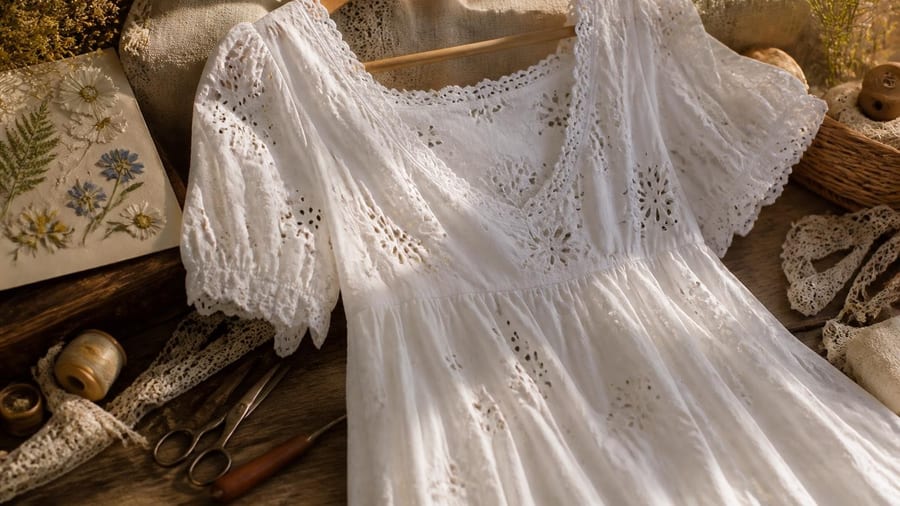
As temperatures climb and wardrobes transition from spring layers to summer ease, one textile detail has emerged as the defining aesthetic of the season: broderie anglaise. This intricate eyelet embroidery, characterized by punched patterns edged with overcast stitching, has reappeared across runways, boutiques and sidewalk style, proving that heritage craftsmanship holds enduring appeal in an era of fast fashion fatigue.
The resurgence of broderie anglaise—French for "English embroidery"—marks a shift toward tactile, artisan-quality fabrics that communicate both refinement and ease. Unlike synthetic prints or digital patterns, the technique's raised texture and negative-space motifs create depth and movement, transforming simple silhouettes into statement pieces without relying on bold color or graphic embellishment.
The History Behind the Lace-Like Embroidery
Broderie anglaise originated in 19th-century Eastern Europe before gaining popularity in Victorian England, where it adorned everything from undergarments to children's christening gowns. The technique involves punching or cutting fabric—traditionally cotton or linen—then reinforcing the edges with buttonhole stitching to prevent fraying. The result resembles lace but maintains the structure and washability of woven cloth.
By the mid-1800s, mechanical looms allowed mass production, democratizing a style once reserved for the wealthy. The fabric became synonymous with summer dressing: breathable, modest yet decorative, and forgiving in an age before air conditioning. Its cyclical returns—from 1970s prairie dresses to early-2000s boho-chic—confirm its staying power as a warm-weather staple.
Why Broderie Anglaise Dominates This Season
Several converging trends explain the fabric's 2025 resurgence. First, the broader "cottagecore" and pastoral aesthetics that gained momentum during pandemic lockdowns continue to influence design, emphasizing natural fibers, handcraft details and romantic silhouettes. Broderie anglaise aligns perfectly with this sensibility, evoking countryside picnics and unhurried afternoons.
Second, sustainability-conscious consumers increasingly favor textiles with visible craftsmanship. Eyelet embroidery's tactile presence signals time and skill, countering the anonymity of mass-produced knits. Brands have responded by highlighting artisan partnerships and transparent supply chains, positioning broderie anglaise as both beautiful and ethically grounded.
"The appeal lies in its dual nature—delicate yet durable, nostalgic yet contemporary," notes textile historian Dr. Laura Fitzsimmons of the Fashion Institute of Technology.
Third, the fabric's inherent breathability addresses climate realities. Cotton or linen broderie anglaise allows air circulation through its perforated patterns, making it practical for rising summer temperatures while maintaining a polished appearance suitable for both casual and semi-formal settings.
Key Silhouettes and Styling Approaches
Designers have translated broderie anglaise into diverse formats this season, moving beyond the expected sundress:
- Midi and maxi dresses: Tiered skirts in white or ecru dominate, often with puffed sleeves or square necklines that reference historical precedents without costume pastiche.
- Separates: Cropped blouses, A-line skirts and wide-leg trousers in broderie anglaise allow modular styling, pairing the fabric with denim, linen or silk for varied occasions.
- Statement tops: Off-the-shoulder or balloon-sleeve designs use the embroidery as focal point, requiring minimal accessories or competing patterns.
- Layering pieces: Lightweight cardigans and kimonos in eyelet cotton serve as transitional layers for air-conditioned interiors or evening breezes.
Color palettes remain predominantly neutral—white, cream, soft beige—which amplifies the fabric's texture and maintains versatility across personal aesthetics. However, secondary offerings in sage green, sky blue and pale pink cater to those seeking subtle color without abandoning the style's airy character.
Practical Considerations for Shoppers
While broderie anglaise offers aesthetic and functional benefits, potential buyers should weigh several factors before investing:
| Consideration | Details |
|---|---|
| Opacity | Perforated patterns may require slip dresses or nude undergarments, particularly in white or lighter shades. |
| Care | Cotton broderie anglaise is machine-washable but benefits from delicate cycles and air-drying to preserve embroidery structure. |
| Fit | Eyelet fabrics have less stretch than jersey; ensure accurate sizing, especially in fitted bodices or waistbands. |
| Season Longevity | While peak wearability runs May through September, layering extends usefulness into early fall in moderate climates. |
Quality varies significantly by price point. Higher-end pieces feature hand-guided embroidery with tighter stitching and reinforced seams, while budget options may use laser-cut synthetics that lack the same drape and durability. Examining stitch density and fabric weight in person—or scrutinizing close-up product images online—helps distinguish craftsmanship levels.
Where the Trend Fits in the Broader Fashion Landscape
Broderie anglaise's prominence reflects a larger industry recalibration toward investment dressing. As consumers purchase fewer items per season, they prioritize pieces that justify cost through longevity, versatility and emotional resonance. A well-made broderie anglaise dress can span years, adapting to shifting trends through styling rather than requiring replacement.
The fabric also bridges generational preferences. Its nostalgic associations appeal to older demographics familiar with previous iterations, while younger shoppers discover it as fresh and Instagram-friendly. This cross-generational reach gives retailers confidence to stock deeper inventories, reinforcing the trend's visibility and accessibility.
Fashion analysts note parallels between broderie anglaise's current moment and the resurgence of other heritage techniques—smocking, crochet, hand-quilting—that signal a collective desire for tangible connection in an increasingly digital marketplace. The fabric's imperfections and variations, far from flaws, become markers of authenticity.
Making the Style Work Beyond Summer
Though positioned as a summer essential, strategic styling extends broderie anglaise's relevance:
- Layer under chunky knit sweaters or denim jackets in early fall, allowing eyelet hems and cuffs to peek through.
- Pair with leather accessories—belts, sandals, crossbody bags—to add weight and contrast against the fabric's lightness.
- Incorporate into transitional capsules by choosing darker neutrals (taupe, camel) that harmonize with autumn palettes.
- Mix textures: combine broderie anglaise tops with structured trousers or midi skirts in heavier weaves for visual balance.
These approaches maximize cost-per-wear, a metric increasingly important to budget-conscious and sustainability-minded shoppers alike.
This article discusses fashion trends and styling suggestions. Textile choices and garment care practices are personal decisions; consult care labels and professional cleaners for specific fabrics.