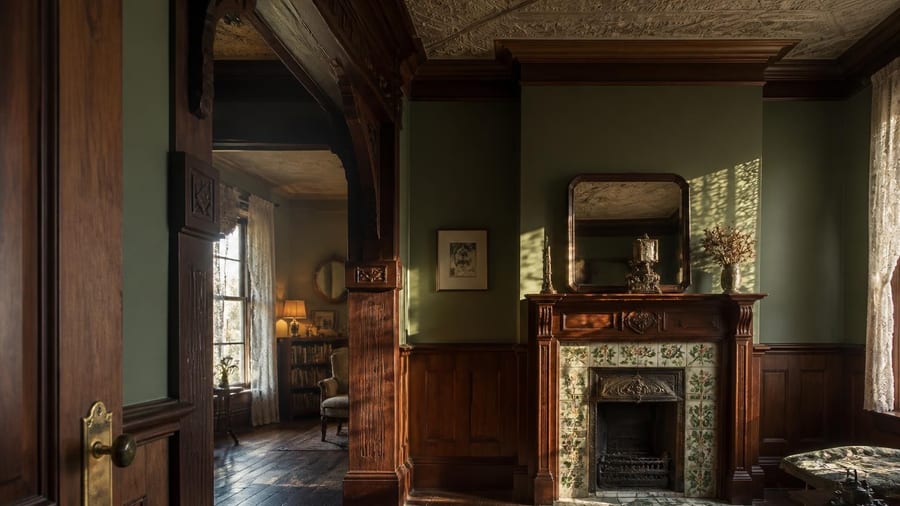
In an era when speed dominates real estate development and interior design, a Victorian-era home in Cape May, New Jersey, stands as a testament to the opposite philosophy: deliberate, immersive craftsmanship that unfolds over years rather than months. The restoration of this 1868 timber-framed house illustrates how dwelling within a project—literally sleeping among construction materials and evolving design choices—can yield results that transcend conventional interior work.
The Architecture of Victorian Ambition
Cape May's architectural heritage stems from a boom period when seaside resort towns competed for the attention of wealthy mid-Atlantic merchants. The village earned federal recognition as a National Historic Landmark district in 1976, preserving more than 600 Victorian structures. These wooden homes feature elaborate scroll-saw detailing made possible by steam-powered tools that democratized ornamental carpentry in the late 19th century.
This particular five-bedroom residence exemplifies the era's decorative exuberance. Its gable-edge carvings and cornice brackets represent both technical skill and social signaling—each flourish communicated prosperity to neighbors in an age before digital status markers. The home's scale, including a separate guest annexe, speaks to the period's emphasis on leisure and hospitality among the merchant class.
Living Inside the Work
The designers behind the transformation adopted an unconventional method: residing on-site throughout the three-year renovation. This approach allowed them to observe how natural light moved through rooms at different times of day, how acoustics changed as finishes were applied, and how spatial relationships revealed themselves through daily living rather than blueprints alone.
The immersive design process transformed discomfort into discovery, as sleeping among crates of vintage furniture allowed the interior to evolve organically rather than according to predetermined plans.
The team sourced period-appropriate furnishings through online auctions and antique dealers, gradually integrating Swedish vintage pieces that complemented the American Victorian framework. This slow accumulation prevented the overly curated look that can plague historically sensitive projects, instead fostering a collected-over-time aesthetic.
Reinventing Historic Techniques
One standout feature demonstrates how traditional methods solve contemporary problems. The designers reinstated the home's original sun porch, which had been partially removed during earlier work. Rather than applying modern flooring, they chose splatter-painted floors—a New England vernacular technique originally developed to disguise the constant tracking of sand, salt, and foot traffic in coastal homes.
This practical tradition doubles as visual interest, with random paint patterns creating texture that machine-made finishes cannot replicate. The method requires patience: multiple layers of contrasting colors applied by hand, with drying time between coats. Such labor-intensive processes define the project's philosophy—valuing craft hours over installation speed.
Key Materials and Finishes
- Hand-applied colored plaster walls that shift tone with changing daylight
- Reclaimed timber elements sourced from regional salvage yards
- Custom-mixed paint formulations based on historical pigment analysis
- Period-appropriate hardware restored through metal workshops
- Splatter-painted porch floors using traditional layering techniques
Balancing Preservation and Livability
Historic renovation presents a consistent tension: how much modern comfort can be introduced before undermining architectural integrity? This Cape May project navigated that balance by maintaining the home's spatial organization and ornamental character while upgrading systems invisibly. Electrical, plumbing, and climate control improvements were threaded through existing cavities rather than imposed on surfaces.
The designers prioritized a "pleasure house" atmosphere—honoring the building's original purpose as a weekend retreat from urban life. Colors lean toward coastal brightness rather than the darker Victorian palette often associated with the period, reflecting research into how seaside resorts historically used lighter tones to amplify sun and ocean reflections.
| Design Element | Historical Precedent | Contemporary Adaptation |
|---|---|---|
| Wall Finishes | Lime plaster | Colored plaster with modern binders |
| Floor Treatments | Splatter painting | Multi-coat application with sealant |
| Millwork | Steam-powered scroll-saw | Preserved original with selective replacement |
| Color Palette | Resort-town pastels | Lightened Victorian hues |
The Economics of Slow Design
Projects of this depth require client trust and financial flexibility. The three-year timeline far exceeds typical residential renovations, which often conclude within six to twelve months. This extended schedule accommodates handwork, sourcing delays for vintage materials, and the iterative decision-making that living on-site enables.
Such timelines also reflect a shift in how some homeowners value real estate—not as flippable assets but as long-term environments shaped to individual sensibilities. The approach aligns with broader movements toward sustainability and craft preservation, though it remains accessible primarily to buyers who can afford patient capital and temporarily forgo full property use.
Lessons for Heritage Preservation
Cape May's designation as a historic district imposes design review requirements that shape renovation possibilities. These regulations protect streetscape character but can frustrate owners seeking modernization. This project demonstrates how constraints can inspire creativity—working within period-appropriate materials and forms while achieving contemporary comfort.
The home's transformation offers a case study for preservationists nationwide. Rather than treating historic buildings as museum pieces, the work shows how intensive, research-based design can honor architectural legacy while supporting active residential use. The key lies in understanding original construction logic and social context, then making additions that respect those foundations.
This article presents design perspectives and historical context for informational purposes. Readers considering historic property renovation should consult licensed architects, preservation specialists, and local historic district regulations to ensure compliance with applicable codes and standards.