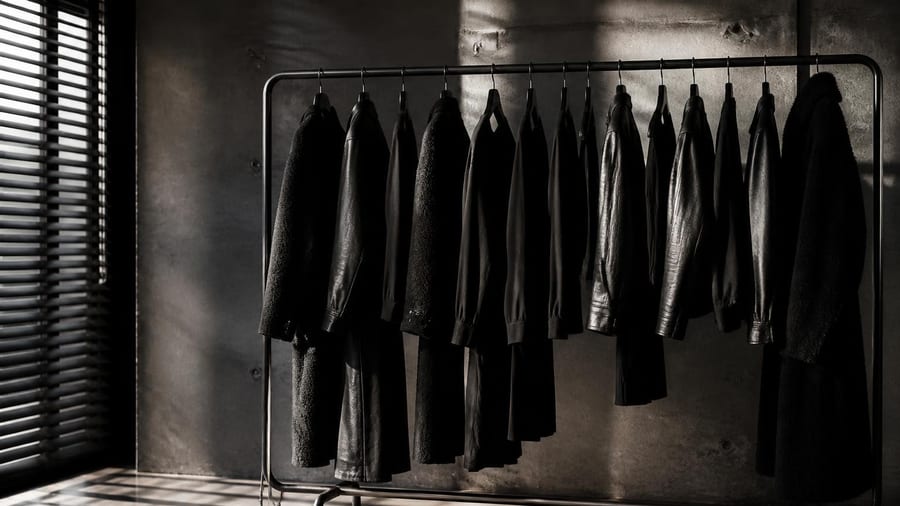
Melbourne has earned a reputation as Australia's most stylish city, but visitors often notice one striking detail: the residents dress almost exclusively in black. Walk through the city's laneways during lunch hour and you'll see waves of workers clad in black trousers, black sweaters, and black jackets. This isn't a fashion fad or temporary trend—it's a defining characteristic of Melbourne's urban identity that reflects deeper cultural and environmental factors.
While some fashion capitals embrace bold colors and seasonal trends, Melbourne has cultivated a different aesthetic. The city's commitment to black clothing may seem excessive to outsiders, but when examined through the lens of climate science, urban planning, and cultural history, the monochrome uniform reveals itself as a surprisingly rational choice.
Climate Patterns Shape Wardrobe Choices
Melbourne's weather operates on a completely different schedule than the rest of Australia. The city experiences a temperate oceanic climate that produces famously unpredictable conditions—locals joke about experiencing four seasons in a single day, and meteorological data supports this claim. Temperature swings of 15-20 degrees Fahrenheit within 24 hours are common, particularly during spring and autumn.
According to the Australian Bureau of Meteorology, Melbourne records an average of 140 days of rainfall annually, with precipitation distributed relatively evenly throughout the year. Winter temperatures regularly drop to the low 40s Fahrenheit, making it the coldest of Australia's mainland capital cities. These conditions create a unique wardrobe challenge: residents need clothing that works across multiple temperature zones without constant outfit changes.
Black becomes the obvious solution. A black base layer works under a black cardigan, which pairs seamlessly with a black coat. When the sun breaks through at noon, layers can be removed without clashing patterns or mismatched colors. The versatility of an all-black wardrobe eliminates decision fatigue and ensures visual coherence regardless of how many pieces you're wearing at any given moment.
The Economics of a Capsule Wardrobe
Beyond weather practicality, Melbourne's black clothing preference aligns with sustainable fashion principles that have gained traction in urban centers worldwide. A monochrome wardrobe functions as the ultimate capsule collection, where every piece coordinates with every other piece.
Research from the University of Cambridge on consumer behavior shows that simplifying wardrobe choices reduces both purchase frequency and textile waste. When your entire closet is built around a single color palette, you need fewer total garments to create diverse outfits. Five black items can generate more combinations than fifteen pieces in multiple colors that don't coordinate.
A monochrome wardrobe eliminates the paradox of choice while maximizing outfit versatility, making black the most efficient color for urban professionals navigating unpredictable schedules and climates.
This efficiency matters in a city known for its high cost of living. Melbourne consistently ranks among the world's most expensive cities for housing, and residents often prioritize spending on experiences—coffee culture, dining, arts events—over constant wardrobe refreshes. Black clothing hides wear better than lighter colors, extending garment lifespan and reducing replacement costs.
European Heritage and Cultural Identity
Melbourne's relationship with black clothing also reflects its historical development as a European-influenced city in the Southern Hemisphere. Following World War II, Melbourne became the primary destination for European immigrants to Australia, with particularly large influxes from Italy, Greece, and Eastern European nations.
This European heritage shaped the city's café culture, architectural preferences, and approach to urban design—but it also influenced fashion sensibilities. Major European fashion capitals like Milan, Paris, and Berlin have long traditions of black-dominant wardrobes, particularly for urban professionals. The aesthetic traveled with immigrants and became embedded in Melbourne's cultural DNA.
European color traditions date back centuries. During the Renaissance, black dyes were among the most expensive and difficult to produce, making black garments a symbol of wealth and sophistication. Spanish and Italian nobility favored black for formal portraits and court appearances. This association between black clothing and refined taste persisted through subsequent centuries and became a defining characteristic of European urban fashion.
Melbourne's European immigrant communities didn't just bring recipes and architectural styles—they imported entire aesthetic frameworks that prioritized understated elegance over flashy display. The city's preference for black reflects this cultural inheritance, creating visual continuity with the urban centers many residents or their ancestors originated from.
Urban Identity and Place Branding
Cities develop distinct identities through both deliberate branding efforts and organic cultural evolution. Melbourne's black clothing phenomenon represents the latter—a grassroots aesthetic that emerged from practical needs and cultural influences, then became reinforced through social norms and media representation.
Urban planners and sociologists recognize that place branding affects everything from tourism to resident behavior. Melbourne has cultivated an identity centered on arts, coffee culture, and understated sophistication. The prevalence of black clothing supports this narrative, distinguishing the city from Sydney's beach-casual aesthetic or Brisbane's subtropical brightness.
This creates a self-reinforcing cycle. New residents observe the predominance of black clothing and adapt their wardrobes accordingly. Retail shops stock more black garments to meet demand. Media coverage emphasizes the monochrome trend, further cementing it as part of the city's identity. What began as a practical response to climate conditions becomes a cultural marker that signals belonging to Melbourne's urban community.
| Factor | Impact on Black Clothing Preference |
|---|---|
| Climate variability | Enables easy layering across temperature fluctuations |
| Rainfall frequency | Dark colors hide water spots and weather-related wear |
| European heritage | Cultural association with sophistication and urban refinement |
| Cost efficiency | Fewer total garments needed for diverse outfit combinations |
The Practical Psychology of Color Choice
Psychological research on decision-making offers another explanation for Melbourne's black wardrobe. Studies conducted at Cornell University and other institutions demonstrate that reducing daily decisions preserves mental energy for more important choices. Tech executives and creative professionals often wear the same outfit repeatedly to minimize decision fatigue.
Melbourne's workforce skews heavily toward knowledge workers, creative industries, and service sector professionals—exactly the demographic most likely to benefit from simplified morning routines. When your wardrobe consists primarily of black items, getting dressed requires minimal cognitive effort. You can grab any combination of garments and know they'll work together, freeing mental resources for work challenges and creative projects.
Additionally, black clothing provides professional camouflage in diverse work environments. The same black outfit that works for a gallery opening functions equally well at a corporate meeting or casual café meetup. This versatility matters in Melbourne's fluid professional landscape, where boundaries between creative and corporate sectors often blur.
Limitations and Considerations
While this analysis explains Melbourne's black clothing preference, individual fashion choices remain personal and diverse. Not every Melbourne resident wears exclusively black, and the city supports thriving vintage, streetwear, and avant-garde fashion scenes that embrace color and pattern.
The monochrome trend also raises questions about conformity and self-expression. Critics argue that widespread adoption of uniform aesthetics can suppress individual creativity and reduce fashion to risk-averse choices. Others note that relying too heavily on a single color palette may limit exposure to diverse cultural fashion traditions that celebrate vibrant hues.
This article examines cultural and environmental factors influencing fashion choices and does not constitute professional advice on personal style or wardrobe planning.