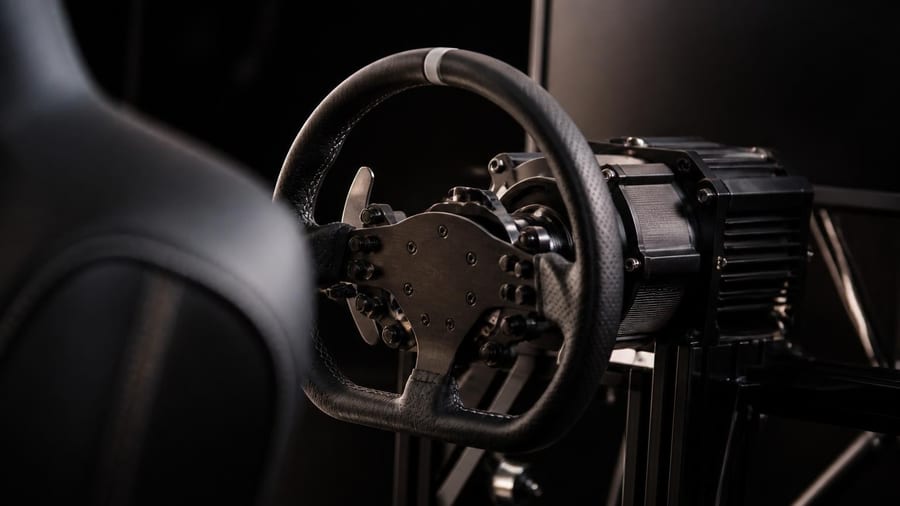
The simulation racing ecosystem has matured into a sophisticated market where hardware precision rivals the engineering found in real motorsports telemetry systems. For drivers who recognize the limitations of gamepad thumbsticks when chasing lap times in Assetto Corsa Competizione or iRacing, a quality racing wheel transforms the entire experience—turning abstract inputs into visceral, mechanical feedback that mirrors the physics of asphalt, tire grip, and weight transfer.
Choosing the right wheel means balancing force feedback technology, pedal quality, compatibility across platforms, and budget constraints that can range from $300 to well over $1,500. This guide examines 11 racing wheels that deliver competitive performance across entry, mid-tier, and enthusiast categories, with an emphasis on what makes each unit stand out in a crowded field.
Entry-Level Wheels That Don't Compromise Core Experience
For drivers making their first serious investment beyond a controller, three wheels offer compelling value without sacrificing essential feedback mechanisms. The Thrustmaster T248 combines hybrid force feedback—a belt-driven system augmented by magnetic sensors—with a leather-wrapped rim and responsive paddle shifters. Its 5 Nm torque output won't replicate a direct-drive motor, but the tactile detail through corners and curb strikes exceeds most belt-driven competitors at the $350 price point.
Logitech's G923 remains a workhorse in this segment, leveraging TRUEFORCE haptic feedback to translate engine vibrations and road texture into the wheel rim itself. While its gear-driven mechanism produces audible noise under load, the overall package—including a three-pedal set with progressive brake resistance—delivers strong compatibility with PlayStation, Xbox, and PC platforms.
The Hori Racing Wheel Apex targets budget-conscious console players seeking basic force feedback without the complexity of a full rig. At roughly $150, it sacrifices adjustability and pedal refinement but maintains PlayStation licensing and adequate torque for casual sim-racing titles like Gran Turismo 7.
Mid-Tier Direct-Drive Options Redefining Value
Direct-drive technology—once reserved for rigs costing several thousand dollars—has trickled into the $500-$800 range, fundamentally altering what mid-tier buyers can expect. The Moza R5 Bundle exemplifies this shift, pairing a 5.5 Nm servo motor with a modular ecosystem that supports rim swaps, sequential shifters, and telemetry dashboards. Its PC-first design prioritizes low-latency USB communication, making it a favorite among time-trial competitors who demand millisecond precision.
Fanatec's CSL DD remains a benchmark in this category despite periodic supply-chain delays. Users praise its 8 Nm boost kit upgrade path, which extends headroom for drivers who later invest in load-cell pedals or motion rigs. The QR1 Lite quick-release system simplifies rim changes between rally, Formula, and GT wheel styles, though purists note the plastic collar lacks the durability of the metal QR1.
Simagic's Alpha Mini enters as a dark horse, offering 10 Nm peak torque in a compact form factor that fits smaller desks without sacrificing detail. Its wireless GT1-R rim integrates a 3.5-inch LCD display for real-time telemetry, reducing reliance on secondary monitor overlays during endurance races.
High-End Direct-Drive Systems for Serious Competitors
When lap-time gains justify four-figure investments, three wheels dominate podium discussions. The Logitech G Pro Racing Wheel targets esports professionals with its TRUEFORCE feedback layer atop an 11 Nm motor, dual-clutch paddles for launch control, and aerospace-grade aluminum construction. At $1,199 for the wheel alone, it assumes buyers will pair it with Logitech's Pro Pedals, which feature a 90 kg load-cell brake calibrated for consistent threshold braking.
The transition from belt-driven to direct-drive systems isn't just about stronger force feedback—it eliminates mechanical slop that masks the precise moment a tire begins to slide.
Fanatec's Podium Racing Wheel F1 caters to single-seater enthusiasts, replicating the button layout and carbon-fiber grip texture of contemporary Formula 1 steering wheels. Its 15 Nm DD1 base provides enough torque to simulate high-downforce cornering loads, though most users dial output to 10-12 Nm for sustainable endurance stints. The magnetic paddle shifters offer adjustable throw distance, a detail that proves critical when downshifting under heavy braking into chicanes.
Simucube's ActivePedal Ultimate represents the apex of current technology, combining a 25 Nm motor with software-defined brake feel that replicates hydraulic systems from specific car models. Priced at $3,500 for the base and wheel combination, it appeals to drivers who view sim racing as a training tool for real-world motorsports or professional esports contracts.
Platform Compatibility and Ecosystem Lock-In
Console racers face stricter hardware limitations than their PC counterparts. PlayStation 5 titles require officially licensed wheels—a certification that limits choices but ensures plug-and-play functionality. Xbox racers benefit from broader compatibility but must verify that wheels include the proprietary security chip for Series X|S games.
PC users enjoy the widest selection, though driver software quality varies. Fanatec's FanaLab suite provides granular tuning for force feedback curves and button mapping, while Logitech's G HUB occasionally frustrates users with update bugs that temporarily disable custom profiles.
- Thrustmaster devices use a T.A.R.G.E.T. scripting tool for advanced macro programming
- Moza's Pit House software integrates telemetry overlays directly into wheel configuration
- Simucube's True Drive utility remains the gold standard for force feedback customization
Pedal Quality Often Outweighs Wheel Torque
Veteran sim racers emphasize that load-cell brake pedals contribute more to consistent lap times than incremental wheel torque increases. Load cells measure pressure rather than travel distance, allowing drivers to apply precise braking force even when heel-toe downshifting or trail-braking into corners.
The Heusinkveld Sprint pedals occupy the sweet spot between affordability and performance, using industrial sensors rated for millions of cycles. Their modular design permits independent adjustment of pedal angle, spacing, and spring preload—critical for drivers transitioning from console pads to dedicated rigs.
Fanatec's ClubSport V3 pedals integrate a rumble motor in the brake pedal that vibrates when ABS activates, providing intuitive feedback without requiring eyes to leave the track. This haptic cue proves invaluable during wet-weather racing when brake lockup thresholds shift unpredictably.
Future-Proofing Your Investment
Racing wheel technology evolves slower than GPU or console generations, making these peripherals multi-year investments. Prioritize systems with firmware update paths and modular components—rims, pedals, and shifters that connect via standardized protocols like USB or RJ12 ensure compatibility as you upgrade individual elements.
Direct-drive motors eliminate the belts and gears that degrade in belt-driven wheels, extending operational lifespan. Expect 5-7 years of daily use from quality DD units before motor brushes or electronics require servicing, compared to 2-3 years for entry-level gear-driven models.
| Wheel Model | Torque (Nm) | Drive Type | Price Range |
|---|---|---|---|
| Thrustmaster T248 | 5 | Hybrid Belt | $350-$400 |
| Moza R5 | 5.5 | Direct Drive | $500-$600 |
| Fanatec CSL DD | 8 | Direct Drive | $700-$900 |
| Logitech G Pro | 11 | Direct Drive | $1,199 |
| Simucube Ultimate | 25 | Direct Drive | $3,500+ |
This information does not replace advice from a qualified professional. Hardware compatibility and performance vary based on individual system configurations and software versions.