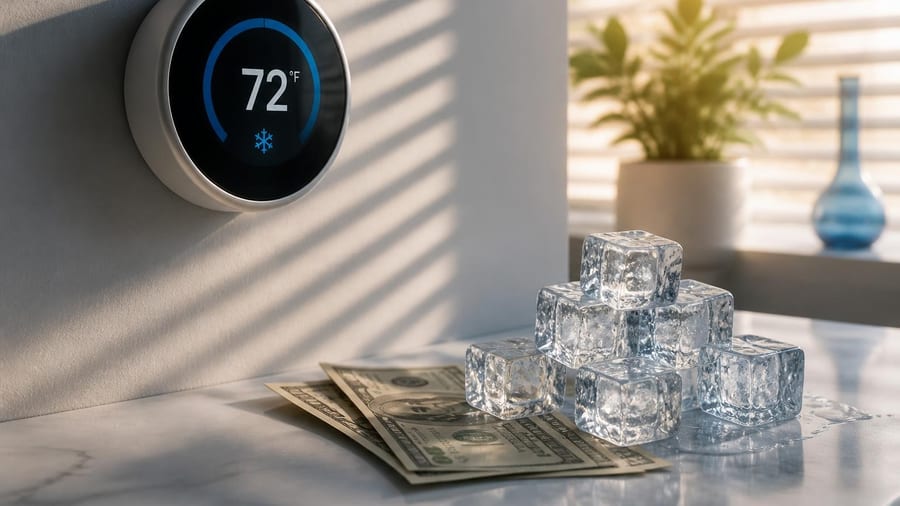
As summer temperatures climb across the United States, millions of households face the same dilemma: how to stay comfortable indoors without watching electricity bills skyrocket. Air conditioning accounts for nearly 6% of all electricity produced in the country, and residential cooling costs can easily double or triple during peak summer months. The trade-off between comfort and cost feels inevitable—until you understand the science behind optimal thermostat settings.
Energy efficiency experts have spent years studying the relationship between indoor temperature, human comfort, and utility expenditure. Their research reveals that small adjustments to your cooling strategy can deliver substantial savings without turning your home into a sweatbox. The key lies in understanding how your body adapts to temperature and how modern HVAC systems operate most efficiently.
The Science Behind the 78-Degree Standard
The U.S. Department of Energy recommends setting thermostats to 78 degrees Fahrenheit when you're home and need cooling. This figure isn't arbitrary—it represents a carefully calculated balance between physiological comfort and energy consumption. At this temperature, most people wearing light clothing can maintain thermal equilibrium without excessive perspiration, while air conditioning units run efficiently without cycling on and off too frequently.
Research shows that for each degree you raise your thermostat above the outdoor temperature differential, you reduce cooling costs by approximately 3 to 5%. A household maintaining 72 degrees when they could comfortably tolerate 78 degrees might be spending 18 to 30% more on cooling than necessary. Over a typical summer, that difference can amount to hundreds of dollars.
Every degree of thermostat adjustment in the direction of the outdoor temperature can save between 3% and 5% on cooling costs, making small changes surprisingly impactful over a full season.
The 78-degree recommendation assumes you're actively occupying your home. When you're away at work or asleep, raising the temperature even higher—or using programmable features—multiplies the savings without affecting comfort during the hours you're actually present.
Finding Your Personal Comfort Zone
Not everyone tolerates 78 degrees equally well. Age, health conditions, humidity levels, and personal physiology all influence thermal comfort. Energy consultants suggest experimenting within a 75-to-78-degree range to identify your household's ideal setting.
Start by setting your thermostat to 78 degrees for three days while paying attention to comfort levels throughout the day. If that feels too warm, drop it one degree and reassess. The goal is to find the highest temperature at which your household remains comfortable during typical daily activities.
Several factors beyond the thermostat number affect perceived temperature:
- Indoor humidity levels between 30% and 50% feel more comfortable at higher temperatures
- Air circulation from fans creates a wind-chill effect that can make rooms feel 3 to 4 degrees cooler
- Clothing choices—switching to lighter fabrics and looser fits—extend your comfort range upward
- Time of day matters, with early morning and evening hours naturally feeling cooler
Smart Strategies to Maximize Efficiency
Beyond the thermostat dial itself, several complementary tactics help maintain comfort while minimizing energy use. Ceiling fans rank among the most effective tools. By creating air movement, they allow you to raise your thermostat setting by up to 4 degrees without sacrificing comfort. A typical ceiling fan costs only pennies per hour to operate compared to dollars for air conditioning.
Window management plays an equally crucial role. During daylight hours, closing blinds and curtains on sun-facing windows blocks solar heat gain that would otherwise force your AC to work harder. Reflective or thermal-backed window treatments can reduce heat transfer by 30% or more. In the evening, opening windows on opposite sides of your home creates cross-ventilation that may eliminate the need for mechanical cooling altogether.
Programmable and smart thermostats automate efficiency. Setting your system to raise temperatures by 7 to 10 degrees when you're away for eight hours can cut cooling costs by roughly 10% annually. Modern smart thermostats learn your schedule and adjust automatically, while also providing usage reports that identify optimization opportunities.
When to Adjust and When to Hold Steady
Contrary to popular belief, constantly adjusting your thermostat throughout the day doesn't necessarily save money. Air conditioning systems operate most efficiently when maintaining a steady temperature rather than attempting rapid cool-downs from much warmer settings. The energy required to drop indoor temperature from 85 to 72 degrees often exceeds the energy saved by letting it rise in the first place.
The exception involves extended absences. If you'll be away for four or more hours, raising the thermostat by 5 to 10 degrees makes sense. For shorter departures, maintaining your baseline setting typically proves more efficient. Overnight, many households can comfortably raise temperatures by 2 to 3 degrees, especially when combined with bedroom fans.
| Situation | Recommended Setting | Potential Savings |
|---|---|---|
| Home and active | 75-78°F | Baseline |
| Away 4+ hours | 83-85°F | 8-12% |
| Sleeping | 78-80°F | 5-8% |
| Vacation (multi-day) | 85°F or off | 15-25% |
Additional Factors That Influence Cooling Costs
Your thermostat setting matters enormously, but it's only one variable in the cooling equation. HVAC system maintenance directly impacts efficiency. Dirty air filters force systems to work harder, potentially increasing energy consumption by 5 to 15%. Replacing filters monthly during peak cooling season ensures optimal airflow.
Duct leaks represent another hidden cost driver. Studies estimate that 20 to 30% of cooled air escapes through gaps and poor connections in typical ductwork before reaching living spaces. Sealing ducts with mastic or professional-grade tape can recover much of that lost efficiency.
Insulation quality affects how well your home retains conditioned air. Homes built before modern energy codes often lack adequate attic insulation, allowing cool air to migrate upward and hot air to radiate downward. Adding insulation to meet current R-value recommendations for your climate zone can reduce cooling needs by 10 to 50%, depending on existing conditions.
Long-Term Considerations and Climate Adaptation
As climate patterns shift and extreme heat events become more frequent across the United States, cooling strategies will continue evolving. Heat pumps—which both heat and cool—are gaining market share due to superior efficiency compared to traditional air conditioners. Zoned systems allow different temperature settings in various parts of your home, eliminating the waste of overcooling unused spaces.
Looking ahead, some experts advocate for gradual thermal adaptation—slowly training your body to tolerate slightly warmer indoor temperatures over successive summers. Research suggests that regular exposure to moderately warm conditions can improve heat tolerance, potentially allowing comfortable living at 79 or 80 degrees instead of 75.
Utilities in many states now offer time-of-use rate structures that charge more for electricity during peak afternoon hours. Households with these plans can optimize savings by pre-cooling their homes to 76 degrees in late morning, then allowing temperature to drift to 80 degrees during expensive peak hours while relying on thermal mass to maintain reasonable comfort.
This information does not replace advice from a qualified HVAC professional or energy auditor who can assess your specific home and climate conditions.