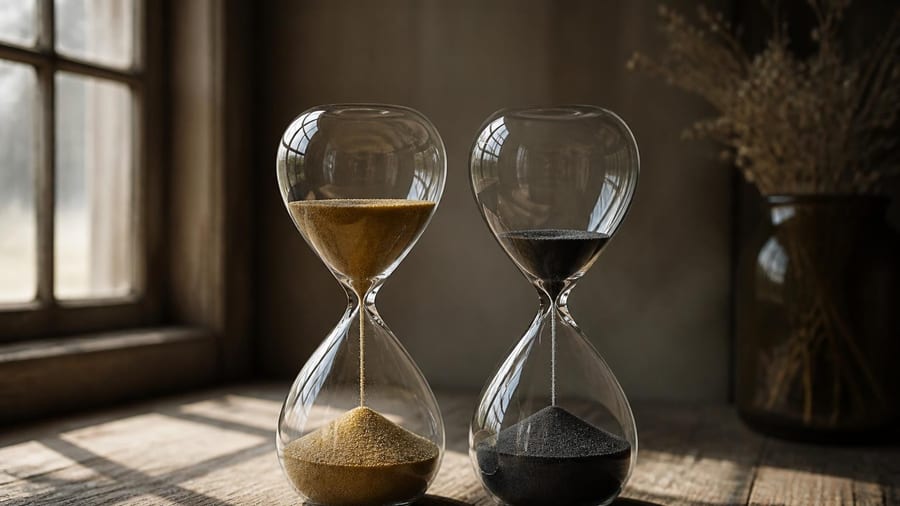
When a sixty-five-year-old mentions she feels closer to fifty inside, family members often smile knowingly. The comment sounds like gentle self-delusion, a polite refusal to acknowledge the march of time. Yet decades of psychological research suggest something more nuanced is at play—a phenomenon so widespread and consistent that it may represent normal cognitive development rather than wishful thinking.
The Twenty Percent Rule
Cross-sectional studies spanning thousands of participants reveal a striking pattern: most adults over forty feel approximately 20% younger than their chronological age, and that percentage remains remarkably stable as they continue aging. A fifty-year-old typically feels forty, a seventy-year-old feels fifty-six, and an eighty-year-old feels sixty-four. The proportion stays constant even as the absolute number of years increases.
This consistency challenges earlier assumptions that viewed subjective age as denial or wishful thinking. If people were simply refusing to accept aging, the gap would likely grow wider with each passing decade—a desperate attempt to cling to youth as the body ages. Instead, the data shows a plateau effect beginning in middle age, suggesting the phenomenon follows predictable psychological architecture rather than escalating panic.
Researchers measuring subjective age across the lifespan found that younger adults under twenty-five often report feeling older than they are, likely reflecting a desire for adult status and independence. The crossover happens around the late twenties, after which the direction reverses permanently. By age forty, the pattern locks in place.
Why the Gap Appears—and Holds
Several competing theories attempt to explain why our internal sense of age diverges from the calendar. One framework suggests that subjective age reflects accumulated life experience and cognitive flexibility rather than physical markers. When older adults say they feel younger, they may be accurately reporting their mental state—curiosity, adaptability, openness to new experiences—qualities stereotypically associated with youth but not necessarily tied to it.
Another explanation centers on reference points. Most people's self-concept crystallizes during late adolescence and early adulthood, a period of intense identity formation. That internal reference age may serve as a baseline against which all future experiences are measured. The sixty-year-old who feels forty may be comparing herself not to a twenty-year-old, but to the person she was at the peak of her cognitive and social engagement.
The gap between felt age and chronological age is not about denying reality—it's about maintaining continuity of self across the lifespan.
Social comparison also plays a role. Older adults who remain physically active and socially engaged often compare themselves favorably to age peers who are less active, reinforcing a younger subjective age. This isn't denial; it's accurate self-assessment within a specific reference group.
Health Implications of Feeling Younger
The practical consequences of subjective age extend beyond dinner-table conversation. Longitudinal research has linked a younger felt age to measurable health outcomes. Adults who report feeling younger than their chronological age tend to show:
- Better cardiovascular health markers, including lower resting heart rate and healthier blood pressure
- Stronger cognitive performance on memory and processing-speed tests
- Higher rates of preventive health behaviors, such as routine screenings and exercise
- Lower mortality risk over multi-year follow-up periods
These associations hold even after controlling for baseline health status, suggesting that subjective age may influence behavior and physiology through mechanisms like stress reduction, motivation, and self-efficacy. People who feel younger may engage more actively with their environment, creating a positive feedback loop that reinforces both the feeling and the physical reality.
Conversely, feeling older than one's chronological age correlates with poorer health trajectories. Some researchers propose that subjective age serves as an early-warning system, integrating subtle cues about declining function before they become clinically apparent. In this view, an unusually old felt age may prompt earlier medical intervention.
Cultural and Individual Variation
While the twenty percent pattern appears across multiple studies in Western populations, cultural context shapes both the size of the gap and its meaning. Societies that venerate age and associate it with wisdom may produce smaller subjective age gaps, while cultures saturated with youth-centric messaging may amplify the discrepancy.
Individual personality traits also modulate the effect. People high in openness to experience and low in neuroticism report younger subjective ages on average. Life transitions—retirement, bereavement, major illness—can temporarily shift felt age in either direction, though most people return to their baseline within a few years.
| Factor | Effect on Subjective Age |
|---|---|
| Regular physical activity | Associated with younger felt age |
| Chronic health conditions | Associated with older felt age |
| Social engagement | Associated with younger felt age |
| Retirement transition | Variable; often temporary shift older |
Reframing the Birthday Conversation
Understanding subjective age as a stable psychological phenomenon rather than denial reframes familiar interactions. When someone says "I don't feel seventy," they're not refusing to acknowledge their age—they're reporting an internal experience shaped by continuity of identity, social comparison, and cognitive function. The statement may actually reflect psychological resilience and adaptive self-perception.
For family members and clinicians, the distinction matters. Dismissing an older adult's younger felt age as mere denial risks invalidating an accurate self-report and may discourage the very behaviors—staying active, remaining engaged—that support healthy aging. At the same time, a sudden shift toward an older subjective age warrants attention as a potential marker of declining health or mood.
The research suggests that feeling moderately younger is both normal and potentially beneficial, while extreme discrepancies in either direction may signal adjustment challenges or health changes worth exploring. The goal is not to feel like a twenty-year-old at seventy, but to maintain a sense of vitality and agency that supports well-being across the lifespan.
What the Science Cannot Tell Us
Current research maps the pattern but leaves key questions open. Investigators do not yet fully understand the causal pathways linking subjective age to health—whether feeling younger directly improves outcomes, whether both are driven by a third variable like socioeconomic status, or whether good health simply makes people feel younger. Intervention studies testing whether deliberately shifting subjective age improves function are still in early stages.
Nor does the research prescribe how anyone should feel about their age. Some older adults report feeling exactly their chronological age and find satisfaction in that alignment. Others experience the gap as uncomfortable, a reminder of limitations they wish to acknowledge rather than minimize. The twenty percent finding describes a population average, not a norm everyone must meet.
This information does not replace advice from a qualified healthcare professional. Concerns about aging, health changes, or psychological well-being should be discussed with a licensed clinician.