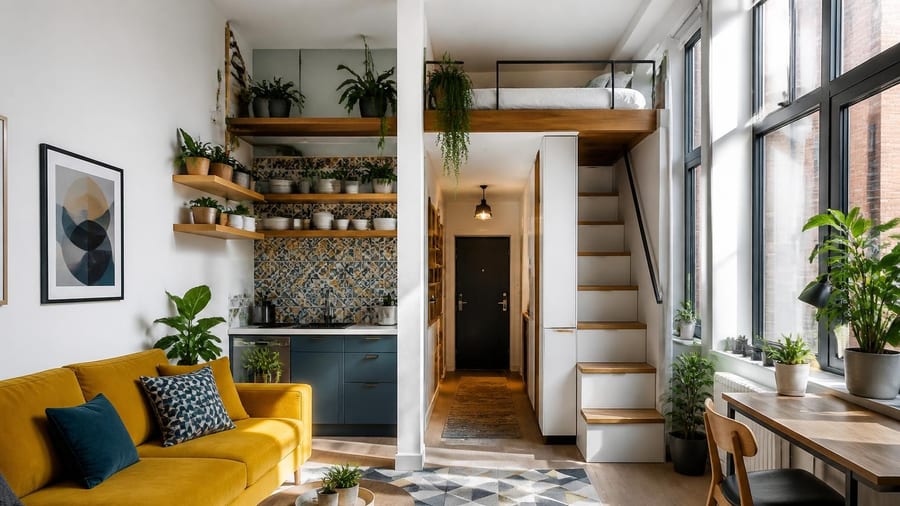
In cities where every square foot commands a premium, 645 square feet might seem limiting. Yet creative homeowners and designers continue to prove that thoughtful spatial planning, strategic color choices, and multifunctional furniture can turn modest footprints into remarkable living environments. The rising popularity of micro-living in urban centers across the United States—from Manhattan studios to San Francisco lofts—demonstrates that downsizing doesn't mean compromising on style or comfort.
Understanding how international design trends inform American small-space solutions offers valuable lessons. The compact apartment aesthetic combines European sensibilities with modern American practicality, creating blueprints that work in any high-density neighborhood.
The Psychology of Color in Compact Spaces
Traditional design wisdom once dictated neutral palettes for small homes, but contemporary approaches embrace bold chromatic choices. Color psychology research shows that vibrant hues can actually enhance perceived spaciousness when applied strategically. Accent walls in saturated tones create focal points that draw the eye, while coordinated color families establish visual continuity across adjoining areas.
In a sub-700-square-foot dwelling, color zones serve dual purposes: they define functional areas without physical barriers and inject personality that prevents minimalist spaces from feeling sterile. Jewel tones—emerald greens, sapphire blues, ruby reds—paired with clean whites create dynamic contrast. The key lies in balance: 60% neutral base, 30% secondary color, 10% accent remains a reliable framework.
Smart color application transforms architectural limitations into design opportunities, making boundaries feel intentional rather than restrictive.
Space-Maximizing Layout Strategies
Open floor plans dominate modern compact living, but successful execution requires careful furniture placement and circulation planning. In 645 square feet, every piece must justify its footprint. Multifunctional furniture—murphy beds, extendable dining tables, storage ottomans—eliminates the single-use problem that plagues larger homes.
Vertical thinking becomes essential. Floor-to-ceiling shelving, wall-mounted desks, and elevated storage capitalize on cubic footage often ignored in conventional layouts. The average American home wastes approximately 30% of vertical space, according to residential design studies. Compact dwellings can't afford that luxury.
- Define zones with area rugs rather than walls
- Use transparent furniture to maintain visual flow
- Install pocket or sliding doors to save swing clearance
- Position mirrors opposite windows to amplify natural light
- Choose low-profile furniture to emphasize ceiling height
Modern Amenities in Minimal Square Footage
Technology enables contemporary conveniences in spaces that once couldn't accommodate them. Compact European-style appliances—18-inch dishwashers, combination washer-dryers, induction cooktops—deliver full functionality at half the footprint. Smart home systems control lighting, temperature, and security without requiring dedicated space for equipment panels.
The kitchen poses particular challenges in small homes. Galley or single-wall configurations maximize efficiency, while open shelving maintains airiness that upper cabinets compromise. A well-designed compact kitchen positions the sink, stove, and refrigerator within a tight work triangle, minimizing steps during meal preparation.
Bathrooms benefit from wall-hung toilets and vanities that create floor clearance, enhancing the sense of space. Frameless glass shower enclosures eliminate visual barriers, while large-format tiles reduce grout lines for cleaner aesthetics.
Natural Light and Artificial Illumination
Light quality profoundly affects how occupants experience small spaces. Maximizing natural light through strategic window treatments—or eliminating them entirely where privacy permits—should be the first priority. Sheer fabrics diffuse harsh sun while maintaining brightness; top-down, bottom-up shades offer privacy without blocking upper window areas.
Layered artificial lighting compensates when daylight proves insufficient. Ambient ceiling fixtures provide general illumination, task lighting addresses specific work areas, and accent lights highlight architectural features or artwork. LED strip lighting under cabinets, along shelves, or behind headboards adds dimension without consuming precious surface area.
| Lighting Type | Purpose | Compact Application |
|---|---|---|
| Ambient | General illumination | Recessed ceiling fixtures, flush-mounts |
| Task | Focused work areas | Under-cabinet strips, adjustable wall sconces |
| Accent | Highlight features | Picture lights, directional spots |
Storage Solutions That Disappear
Clutter destroys the illusion of spaciousness faster than any architectural flaw. Successful compact living demands aggressive organization and creative storage thinking. Built-in solutions—window seats with lift tops, staircase drawers, toe-kick compartments—exploit otherwise wasted niches.
The one-in, one-out rule prevents accumulation: for every new item entering the home, one must leave. Seasonal rotation keeps only currently relevant belongings accessible. Digital alternatives reduce physical storage needs; e-books, streaming services, and cloud storage eliminate shelves of media.
Furniture with hidden compartments serves double duty. Platform beds with integrated drawers, coffee tables with lift tops, and benches with interior storage maintain clean sight lines while housing necessities.
Lessons for American Micro-Living
As housing costs rise in major US metropolitan areas, the small-space movement gains momentum. According to US Census Bureau data, the median size of newly built single-family homes has declined slightly since peaking in 2015, while apartment sizes in urban cores continue shrinking. Understanding how European design traditions adapt to compact footprints offers practical strategies for American homeowners and renters facing similar constraints.
The principles remain universal: prioritize quality over quantity, invest in versatile pieces, embrace vertical dimensions, and use color strategically. Whether in Paris, Portland, or Philadelphia, 645 square feet becomes entirely livable—even desirable—when designed with intention.
This information does not replace advice from a qualified professional. Consult licensed architects, interior designers, or real estate experts for guidance specific to your situation.