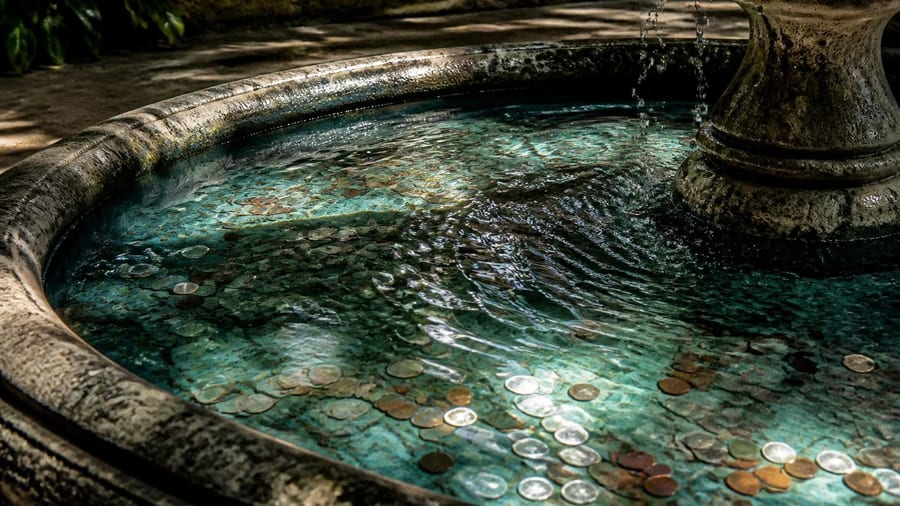
Walk past any public fountain in America and you'll likely see the glint of copper, silver, and zinc coins resting on the bottom. From the ornate displays in shopping malls to centuries-old wells in historic districts, the ritual of tossing coins into water has persisted across cultures and continents. This seemingly whimsical gesture carries roots that stretch back thousands of years, reflecting humanity's enduring relationship with water, wish-making, and the symbolic power we invest in everyday objects.
The practice transcends logic. Most people who throw coins into fountains don't genuinely believe a deity will grant their request, yet the urge remains. Understanding why this tradition endures offers insight into human psychology, cultural memory, and our collective need to participate in rituals that connect us to something larger than ourselves.
Ancient Water Worship and Sacred Springs
Long before coins existed, water sources held profound spiritual significance across civilizations. Springs, wells, and natural pools were often viewed as portals to the divine or dwelling places of spirits. Archaeological evidence shows that ancient peoples left offerings at these sites—food, tools, weapons, even sacrifices—to honor deities believed to control water's life-giving properties.
In Celtic Europe, sacred wells dotted the landscape, each associated with healing powers or protective spirits. The Romans believed water nymphs inhabited springs and required tribute. When standardized currency emerged around 600 BCE in ancient Lydia (modern-day Turkey), coins gradually replaced perishable offerings. Metal endured where grain or flowers would decay, creating a lasting record of human supplication.
The Roman Empire spread this coin-tossing practice throughout its territories. Soldiers, merchants, and pilgrims threw coins into springs as they traveled, seeking safe passage or giving thanks. The famous Trevi Fountain in Rome, completed in 1762, collects approximately $1.5 million in coins annually, demonstrating how ancient impulses persist in modern settings.
The Psychology of Wishing
Why does throwing a quarter into a fountain feel meaningful, even when we know it won't change our fate? Behavioral psychology offers explanations rooted in how humans process uncertainty and exert perceived control over outcomes.
The act creates what researchers call a symbolic ritual—a physical expression of an internal desire. By converting an intangible wish into a tangible action, we create the illusion of agency. The coin becomes a messenger carrying our hope into a realm beyond ordinary reach. This transformation satisfies a deep psychological need to participate actively in shaping our future, however symbolically.
People engage in superstitious behavior not because they're irrational, but because uncertainty creates anxiety, and ritual provides comfort through predictable action.
The water itself amplifies this effect. Reflective surfaces have long been associated with mystery and revelation—think of mirror divination or gazing into still pools. Water's shimmer and depth suggest hidden dimensions, making it an ideal receptacle for wishes. The sound of the coin breaking the surface, the ripples spreading outward, and watching the metal sink all contribute to a sensory experience that registers as significant in our minds.
Cultural Variations and Global Practices
While the Western tradition of fountain coins is well-known, similar practices exist worldwide with local variations:
- Japan: Visitors to Shinto shrines toss coins into offering boxes before prayer, a practice called saisen. The amount matters less than the gesture of respect.
- China: Throwing coins at temple bells or into specific pools is believed to bring prosperity, though authorities increasingly discourage the practice to protect historic sites.
- India: Devotees leave coins at sacred rivers and temple tanks, particularly during religious festivals, as offerings to river goddesses.
- Middle East: Wishing wells near holy sites have collected coins for centuries, with the practice predating Islamic traditions and continuing today.
These variations share common threads: water as a sacred or special medium, coins as carriers of intention, and the belief that small sacrifices may influence larger outcomes. The universality suggests the practice addresses fundamental human needs rather than culturally specific beliefs.
What Happens to Fountain Coins
The practical aftermath of coin-tossing reveals an unexpectedly positive outcome. Most public fountains are regularly cleaned, and collected coins typically go to charitable causes. The Trevi Fountain's haul supports food programs for Rome's poor. New York's numerous fountains have directed coin collections to various nonprofits. Orlando's Epcot Center donates fountain coins to children's charities.
This creates an interesting circularity: personal wishes inadvertently fund community welfare. What began as individual acts of hope accumulate into collective benefit. Some philosophers argue this unintended altruism justifies the tradition on purely secular grounds, regardless of whether wishes come true.
| Fountain Location | Annual Collection | Beneficiary | |
|---|---|---|---|
| Trevi Fountain, Rome | ~$1.5 million | Catholic charity Caritas | |
| Bethesda Fountain, NYC | ~$35,000 | Central Park maintenance | |
| Bellagio Fountains, Las Vegas | ~$12,000 | Local charities (rotated) |
However, not all coin-tossing is benign. At historic sites, coins can damage delicate ecosystems or corrode ancient stonework. Conservation efforts at some locations now actively discourage the practice, asking visitors to donate directly to preservation funds instead.
Modern Interpretations and Continuing Appeal
In an era of digital transactions and scientific worldviews, the coin-fountain tradition might seem destined for obsolescence. Yet it persists, especially among tourists and families with children. Why? The answer lies in what traditions provide beyond their literal purpose.
Tossing a coin creates a participatory moment—a small ceremony that breaks the monotony of daily life. It's a chance to pause, reflect on desires, and engage in playful magic thinking without serious commitment. Parents teach children the tradition, creating intergenerational bonds. Couples throw coins together, sharing private wishes. The act becomes less about believing in supernatural intervention and more about marking a moment as special.
Social media has added new dimensions. Photographing oneself throwing a coin, or capturing the glittering bed of a famous fountain, extends the tradition into digital spaces. The practice becomes content, performance, and memory-making simultaneously. This evolution suggests the tradition adapts to cultural changes rather than rigidly maintaining ancient meanings.
The Deeper Meaning Behind the Gesture
Ultimately, the endurance of coin-tossing reveals something essential about human nature: we are ritual-making creatures who find meaning through symbolic action. The literal effectiveness matters less than the psychological and social functions the practice serves.
Throwing a coin into a fountain acknowledges our hopes while releasing attachment to outcomes. It's a miniature act of faith—not necessarily in gods or magic, but in the possibility that expressing a wish is valuable in itself. The ritual recognizes that some things lie beyond our control while affirming our desire to participate in shaping our lives, however symbolically.
As urban fountains continue to collect coins and charitable organizations benefit from these accumulated wishes, the tradition demonstrates how ancient impulses can serve contemporary purposes. The specifics may have changed—we're not appeasing water spirits anymore—but the core human needs for hope, connection, and ritual expression remain constant.
This article explores cultural traditions and psychological patterns for informational purposes and does not make claims about the effectiveness of wish-making practices.