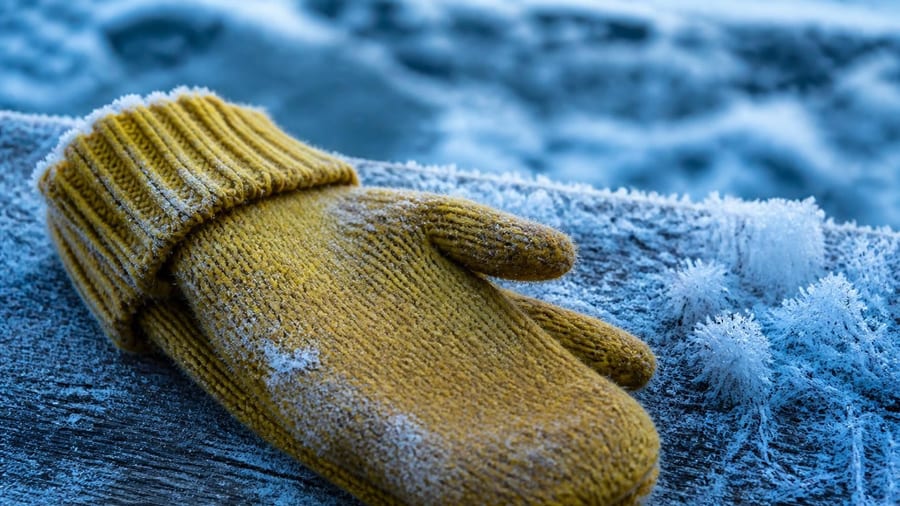
For generations across North America's coldest regions, a simple truth has endured: when temperatures plunge and wind cuts through layers of clothing, yellow mittens outperform nearly everything else. Known colloquially as "choppers," these distinctive winter accessories carry a lineage stretching back more than three centuries, rooted in Indigenous Arctic engineering and refined through decades of hard outdoor labor.
The story of these mittens is not simply about color preference or fashion. It represents a remarkable case study in functional design, material science, and the transmission of practical knowledge across cultures and centuries. Understanding why this particular style has remained largely unchanged reveals fundamental principles about cold-weather survival and the value of time-tested innovation.
Arctic Engineering and the Birth of Multi-Layer Protection
Long before modern synthetic insulation existed, Indigenous peoples of the Arctic developed sophisticated solutions to extreme cold. The original double-layered mittens—called pualuuk in Inuit communities—combined water-resistant outer shells with insulating inner layers, creating a system that managed both moisture and heat retention. The outer layer typically used sealskin for its natural waterproofing properties, while caribou hide lined the interior, trapping warm air close to the skin.
This two-layer approach solved a critical problem that still challenges winter gear designers today: balancing warmth with breathability. A completely sealed mitten might trap heat initially, but moisture from perspiration quickly accumulates, eventually making hands colder. The Arctic design allowed air circulation while maintaining thermal protection, a principle that modern cold-weather gear still follows.
Different communities adapted the basic template to local resources. Deer, beaver, moose, and elk skins all found their way into mitten construction, each offering distinct advantages. Buckskin became particularly valued for its silent quality during hunting and its ease of repair—practical considerations when survival depended on maintaining functional gear in environments where replacement materials were scarce.
The Smoke-Tanning Process and Distinctive Color
The characteristic yellow hue that eventually became synonymous with quality cold-weather mittens originated not from dye but from necessity. Traditional smoke-tanning methods, used to preserve and soften animal hides, involved suspending skins over controlled fires for extended periods. This process imparted a golden-yellow to amber color while simultaneously making the leather more supple, water-resistant, and durable.
Smoke-tanning offered advantages beyond coloration. The compounds in wood smoke acted as natural preservatives, extending the life of the leather and providing some degree of pest resistance. The slow tanning process also maintained the hide's natural breathability—critical for preventing moisture buildup during strenuous activity in cold conditions.
As these mittens proved their worth in the harshest climates, the yellow color became an identifier of authentic, traditionally made hand protection. When commercial manufacturers later entered the market, many deliberately chose yellow dyes to invoke that association with proven Arctic design, even when using different materials or construction methods.
Adaptation by North American Workers
The 19th-century logging industry across the American Northeast, Upper Midwest, and Canadian provinces created demand for durable, practical winter gear on an unprecedented scale. Lumberjacks spending entire days outdoors in subzero temperatures needed hand protection that could withstand repetitive motion, maintain grip on tool handles, and provide warmth without sacrificing dexterity.
Workers adapted the Indigenous double-layer design, adding a removable wool liner beneath a leather shell. This three-component system offered flexibility that single-layer gloves could not match:
- The outer leather layer blocked wind and repelled moisture from snow
- The wool liner provided insulation and could be removed for drying
- Air trapped between layers created additional thermal protection
- Individual components could be replaced as they wore out
The term "choppers" emerged from the logging camps, referencing the wood choppers who relied on them. The name stuck even as the mittens spread to other outdoor professions—commercial fishing, farming, construction, and eventually recreational winter sports.
Military Standardization and Widespread Distribution
By the mid-20th century, the United States military recognized the proven effectiveness of this design. The Navy's N-3 work gloves and similar cold-weather gear issued to service members incorporated the same fundamental principles: leather shells, removable wool liners, and extended cuffs to prevent snow infiltration.
Military procurement standardized the design and manufacturing processes, creating consistent quality benchmarks that influenced the civilian market for decades.
Veterans returning to civilian life after World War II and the Korean War brought familiarity with military-issue cold-weather gear, creating broader consumer awareness. Manufacturers began producing civilian versions that maintained the core features while offering variations in materials, sizing, and styling. The basic architecture, however, remained remarkably consistent with patterns established centuries earlier in Arctic communities.
Why the Design Endures in Modern Winter Gear
Despite advances in synthetic materials and insulation technologies, the fundamental design principles embodied in traditional yellow choppers continue to inform modern cold-weather hand protection. Contemporary winter gloves and mittens still grapple with the same challenges: moisture management, thermal retention, durability, and dexterity.
Several factors explain the design's longevity:
| Design Element | Functional Advantage | Modern Equivalent |
|---|---|---|
| Removable liner | Allows drying, extends gear life | Glove systems with separate shells and insulation |
| Natural leather shell | Wind resistance, durability, breathability | Technical fabrics with similar properties |
| Mitten shape | Fingers together generate more heat | Lobster-claw and convertible designs |
| Extended cuff | Prevents snow entry at wrist | Gauntlet-style gloves with wrist closures |
Modern materials like Gore-Tex, Thinsulate, and treated leathers have enhanced specific performance characteristics, but the overall architecture remains strikingly similar to the pualuuk worn by Arctic hunters three centuries ago. This continuity speaks to the effectiveness of the original engineering and the difficulty of fundamentally improving upon a design optimized through generations of real-world testing in extreme conditions.
Cultural Recognition and Regional Identity
In many northern US states and Canadian provinces, yellow mittens carry cultural significance beyond their practical function. For people who grew up in Minnesota, Wisconsin, the Dakotas, Maine, and similar regions, choppers represent childhood memories of snow forts, ice fishing, and winter sports. The distinctive appearance makes them instantly recognizable, creating a sense of shared regional identity.
This cultural association has kept demand steady even as winter recreation has become increasingly commercialized and brand-conscious. While fashion-forward ski gloves and technical mountaineering mittens occupy premium market segments, traditional yellow choppers maintain their place as affordable, reliable, and culturally resonant cold-weather gear.
Some manufacturers still produce mittens using methods closely resembling traditional approaches, maintaining connections to the original Arctic innovations. Others have modernized materials and construction while preserving the visual identity and fundamental design principles that made choppers effective across three centuries of use.
Practical Lessons from Historical Design
The enduring success of yellow mittens offers broader insights into product design and the value of traditional knowledge. In an era of rapid technological change, it's easy to assume that newer always means better. The chopper story suggests otherwise—sometimes designs optimized through long experience in demanding conditions cannot be meaningfully improved, only adapted to new materials.
For anyone spending significant time in cold climates, understanding the principles behind these mittens provides practical guidance. Layering systems that allow moisture escape, removable components that can be dried separately, and materials that balance insulation with breathability remain as relevant today as they were in Arctic hunting camps centuries ago. Whether choosing traditional leather-and-wool choppers or high-tech synthetic alternatives, these core principles should guide selection.
This article discusses historical design and materials; specific product recommendations should be evaluated based on individual needs and current safety standards.