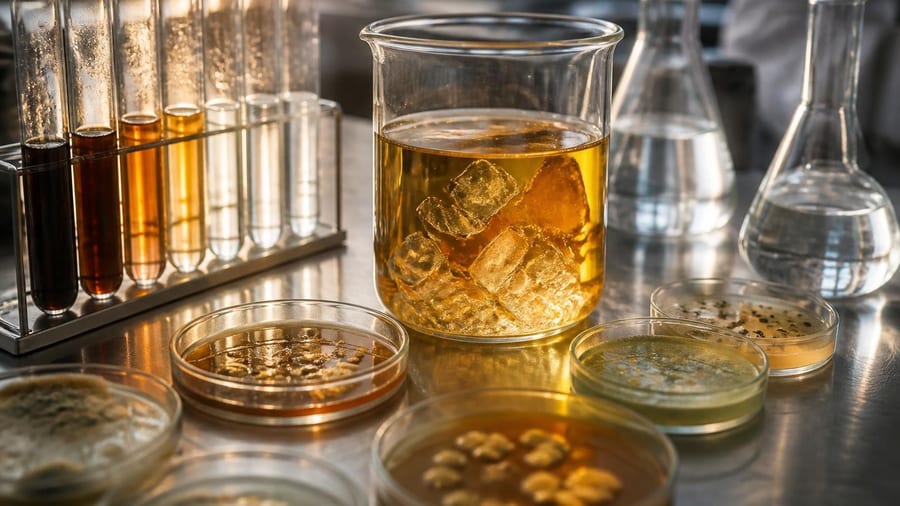
The United States generates more than 35 million tons of plastic waste annually, with only about 9% successfully recycled through conventional mechanical methods. As landfills overflow and oceans accumulate floating debris, scientists are turning to nature's own toolkit: enzymes and microorganisms capable of breaking down synthetic polymers into their constituent molecules. This biological approach, often called enzymatic or biocatalytic recycling, represents a fundamental shift from melting and remolding plastics to disassembling them at the molecular level and recovering chemical building blocks.
Unlike traditional recycling, which degrades plastic quality with each cycle, biological recycling promises to return materials to virgin-grade monomers—the raw ingredients used to make new plastics. Researchers at universities and startups across the country are racing to scale technologies that were once confined to laboratory flasks, bringing biological plastic recycling closer to commercial reality.
How Does Biological Plastic Recycling Work?
Biological recycling harnesses enzymes—protein catalysts that accelerate chemical reactions—to cleave the long polymer chains that give plastics their strength and flexibility. Polyethylene terephthalate (PET), commonly found in beverage bottles and food packaging, has become the primary target. Scientists have identified and engineered enzymes, such as PETase and its relatives, that snip the ester bonds linking PET's repeating units.
The process typically unfolds in several stages:
- Pre-treatment of plastic waste to remove contaminants and reduce particle size
- Exposure to enzyme solutions in controlled temperature and pH conditions
- Breakdown of polymers into monomers like terephthalic acid and ethylene glycol
- Purification and recovery of monomers for repolymerization into new plastic
Some systems employ whole microbial cells rather than isolated enzymes. Bacteria and fungi that have evolved to consume plastic in polluted environments produce enzyme cocktails capable of degrading multiple polymer types. Researchers screen environmental samples—from compost heaps to contaminated soil—to discover new biocatalysts with superior performance.
What Plastics Can Be Biologically Recycled?
PET remains the most advanced target for biological recycling because its chemical structure is relatively enzyme-accessible. Major beverage companies have partnered with biotechnology firms to develop closed-loop systems that convert used bottles back into food-grade resin. Field trials have demonstrated that enzymatically recycled PET can meet regulatory standards for direct food contact, a milestone that mechanical recycling struggles to achieve consistently.
Biological recycling offers the potential to create infinite loops for certain plastics, decoupling production from fossil feedstocks while reducing landfill dependency.
Beyond PET, researchers are tackling polyurethanes found in foams, coatings, and adhesives. These materials resist conventional recycling due to their cross-linked structure, but specific enzymes can hydrolyze urethane bonds. Polyamides (nylons) and polycarbonates are also under investigation, though enzyme discovery for these polymers lags behind PET.
Polyolefins—polyethylene and polypropylene, which account for nearly half of all plastic production—pose greater challenges. Their carbon-carbon backbones resist enzymatic attack, requiring either pre-treatment with heat or oxidation, or the discovery of entirely new enzyme families. Some labs are exploring hybrid approaches that combine biological and chemical catalysts.
Economic and Environmental Trade-Offs
Scaling biological recycling from pilot plants to industrial facilities requires addressing cost, speed, and energy inputs. Enzyme production itself demands fermentation infrastructure, and biocatalysts must be recovered and reused to keep unit costs competitive with virgin plastic. Current systems often require elevated temperatures (50–70°C) to accelerate reaction rates, adding energy overhead.
| Method | Energy Use | Output Quality | Polymer Compatibility |
|---|---|---|---|
| Mechanical recycling | Moderate | Degrades over cycles | Limited by contamination |
| Chemical recycling | High (pyrolysis) | Variable monomer purity | Broad but energy-intensive |
| Biological recycling | Moderate to low | High-purity monomers | Growing, PET-focused |
Life-cycle assessments suggest that enzymatic recycling can reduce greenhouse gas emissions by 30–50% compared to producing virgin PET from petroleum, provided renewable energy powers the process. However, enzyme production, transportation of waste, and purification steps all carry environmental footprints that must be minimized through process optimization.
Industry Adoption and Pilot Projects
Several U.S.-based companies have launched pilot facilities to test biological recycling at scale. One venture in California processes post-consumer PET bottles using engineered enzymes, targeting throughput of several tons per day. Another collaboration between a Midwest university and a packaging manufacturer focuses on polyurethane foam from discarded mattresses, converting the material into polyols for new foam synthesis.
Regulatory acceptance is advancing. The Food and Drug Administration has reviewed enzymatically recycled PET under its "letter of no objection" process, paving the way for brands to incorporate biologically recycled content in food packaging. This regulatory clarity encourages investment and partnerships across the supply chain.
Challenges remain in feedstock consistency. Municipal recycling streams contain mixed plastics, dyes, additives, and residual food, all of which can inhibit enzyme activity. Sorting technologies and pre-processing protocols must mature in parallel with biocatalytic systems to ensure steady, clean feedstock supply.
Future Directions and Research Frontiers
Enzyme engineering continues to accelerate. Computational protein design and directed evolution techniques allow scientists to create biocatalysts with improved thermal stability, broader substrate specificity, and faster turnover rates. Some teams are embedding enzymes in polymer beads or immobilizing them on solid supports to enable continuous-flow reactors that reduce processing time and increase throughput.
Researchers are also exploring valorization pathways that transform plastic waste into chemicals beyond the original monomers. Instead of simply recovering terephthalic acid, enzymes might convert it into precursors for pharmaceuticals, fragrances, or biodegradable polymers, unlocking new revenue streams and expanding the economic case for biological recycling.
International collaboration is growing, with data-sharing initiatives aimed at cataloging enzyme sequences, reaction conditions, and performance metrics. Open-access databases help labs avoid duplicating efforts and accelerate the translation of laboratory discoveries into industrial practice.
This information does not replace advice from a qualified environmental engineer, waste management professional, or regulatory consultant.