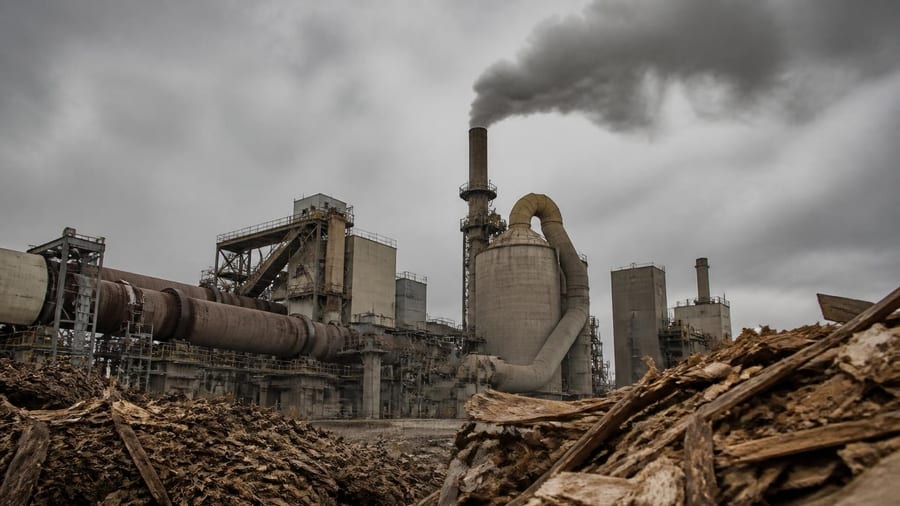
Cement production stands as one of the most carbon-intensive industries on the planet, accounting for up to 8% of global carbon emissions. As governments race to meet climate commitments, the search for alternatives to fossil fuels has led some policymakers down a questionable path: burning forest biomass—trees, deadwood, and understory vegetation—to fire the kilns that transform limestone into cement's key ingredient, clinker.
Recent government investments in biomass-fueled cement facilities have reignited debate over whether this approach represents genuine progress or a climate detour. The underlying question is critical: Does replacing coal with forest material truly reduce emissions, or does it simply shift the carbon problem while creating new environmental harms?
Why Cement Production Demands So Much Energy
Manufacturing cement requires extreme heat—temperatures exceeding 2,600°F—to chemically transform limestone and clay into clinker, the binding agent in concrete. This process, known as calcination, releases carbon dioxide both from burning fuel and from the limestone itself as it breaks down. Roughly 56% of cement emissions stem from the chemical reaction during clinker production, while the remaining emissions come from fuel combustion and electricity use.
Traditional cement kilns have relied on coal, natural gas, and petroleum coke for decades. The industry's enormous carbon footprint has made it a prime target for decarbonization efforts. Policymakers have looked to biomass as a supposedly carbon-neutral alternative, arguing that trees absorb carbon dioxide as they grow, offsetting the emissions released when they burn.
This accounting method, however, ignores a fundamental problem: timing.
The Carbon Time-Lag Problem
When forest biomass burns, it releases carbon dioxide immediately—roughly one ton of CO₂ per ton of dry wood. The carbon that took decades or centuries to accumulate in tree trunks, branches, and roots enters the atmosphere in minutes. Meanwhile, the promise of carbon reabsorption depends on new trees growing to maturity, a process that can take 50 to 100 years or longer depending on species and climate.
Up to 30% of carbon dioxide emissions remain in the atmosphere after 1,000 years, contributing to warming long after the initial combustion event.
During this lag period, atmospheric carbon concentrations rise, accelerating climate change at the precise moment when scientific consensus calls for rapid emissions reductions. Research from institutions studying forest carbon dynamics demonstrates that this temporal mismatch undermines climate mitigation goals, particularly when biomass burning occurs at industrial scales.
The comparison to fossil fuels reveals another disadvantage. Coal and natural gas have higher energy density than wood, meaning forest biomass must be burned in larger quantities to generate equivalent heat. This volume requirement intensifies pressure on forest ecosystems and multiplies the immediate carbon pulse.
Hidden Environmental Costs Beyond Carbon
What industry representatives label as forest "waste" often plays essential ecological roles. Fallen logs host fungi, insects, and microorganisms that drive nutrient cycling. Dead standing trees provide nesting cavities for birds and mammals. Understory vegetation stabilizes soil, prevents erosion, and shelters seedlings.
Removing this material disrupts forest structure and biodiversity. Studies of forest health indicators show that intensive biomass extraction can:
- Reduce soil organic matter and nutrient availability
- Decrease habitat complexity for wildlife species
- Increase vulnerability to pests and disease
- Slow natural regeneration processes
- Compact soil through heavy equipment operations
These ecological consequences extend beyond individual forest stands. At landscape scales, biomass harvesting can fragment wildlife corridors and alter hydrological patterns, with downstream effects on water quality and flood resilience.
International Experience and Policy Lessons
European nations that embraced biomass energy have encountered unintended consequences. The United Kingdom and several continental countries now import wood pellets to meet renewable energy mandates, creating supply chains that span continents. This international trade has raised concerns about carbon accounting transparency and forest management practices in exporting regions.
Data from European environmental agencies indicate that some countries relying heavily on biomass may struggle to meet greenhouse gas reduction targets under the Paris Agreement. The discrepancy arises partly from accounting rules that treat biomass combustion as zero-emission at the point of burning, even though the carbon enters the atmosphere immediately.
A comparison of emissions trajectories shows the policy challenge clearly:
| Energy Source | Immediate CO₂ per Unit Energy | Carbon Payback Period |
|---|---|---|
| Coal | High | N/A (fossil) |
| Forest Biomass | Higher per BTU | 50-100+ years |
| Solar/Wind | Near zero | N/A |
Genuine Low-Carbon Alternatives for Cement
The cement industry has multiple pathways to reduce emissions without relying on forest biomass. Emerging technologies and process modifications offer more promising routes:
Carbon capture and storage (CCS) systems can trap CO₂ at cement plants before it reaches the atmosphere. Pilot projects in North America and Europe have demonstrated technical feasibility, though costs remain a barrier to widespread adoption.
Alternative cement formulations reduce or eliminate clinker, the most carbon-intensive component. Geopolymer cements, limestone calcined clay cements, and other innovations can cut emissions by 30% to 70% compared to conventional Portland cement.
Electrification of kilns using renewable electricity eliminates combustion emissions from fuel, though the high temperatures required present engineering challenges. Research institutions are developing electric and hybrid heating systems tailored to cement production.
Waste heat recovery and energy efficiency improvements can reduce fuel demand by 20% to 30% in existing facilities. Combined with fuel switching to truly low-carbon sources like green hydrogen, these measures could substantially lower the industry's footprint.
Economic and Policy Considerations
Government subsidies for biomass-fueled cement production raise questions about the most effective use of public climate funding. Economic analyses suggest that equivalent investments in genuinely low-carbon technologies—renewable electricity, carbon capture, or alternative cement formulations—would deliver greater emissions reductions per dollar spent.
The risk of "locking in" biomass infrastructure presents another concern. Facilities designed to burn forest material may operate for decades, creating path dependencies that delay adoption of superior technologies. This phenomenon, known as carbon lock-in, has historically slowed industrial decarbonization.
Transparent carbon accounting will be essential for evaluating climate policies. Regulations that ignore the time dimension of carbon cycling or exclude indirect effects like forest degradation provide incomplete guidance for decision-makers and investors.
This information does not replace advice from qualified environmental, forestry, or energy policy professionals.