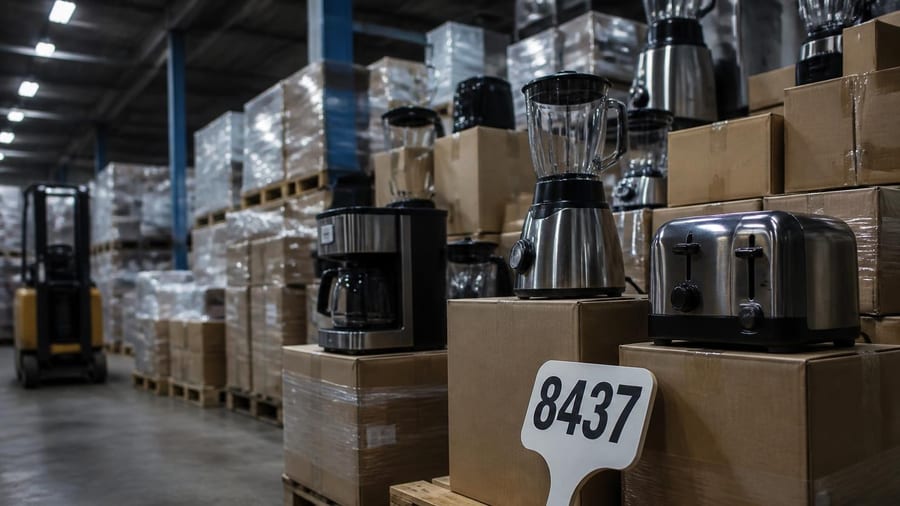
For decades, the destination of unsold retail inventory has been a mystery to most consumers. When a stand mixer sits too long on the shelf or a refrigerator gets returned, warehouse clubs like Sam's Club need an exit strategy that doesn't involve landfills or endless markdown cycles. The answer increasingly lies in business-to-business liquidation auctions, where resellers, small business owners, and discount retailers compete for bulk lots of kitchen appliances at pennies on the dollar.
Sam's Club has partnered with B-Stock Solutions, an online liquidation marketplace that connects retailers with approved business buyers. The platform handles everything from returned blenders to brand-new dishwashers that never found a buyer through traditional retail channels. Unlike consumer-facing clearance sales, these auctions require a resale certificate and operate on a pallet-purchase model designed for commercial operations rather than individual shoppers.
The Business Model Behind Liquidation Auctions
Retailers face a constant challenge with inventory that can't move through normal sales channels. Seasonal overstock, customer returns, floor models, and items with damaged packaging all create financial dead weight. Rather than absorbing total losses, warehouse clubs turn to liquidation partners who specialize in moving merchandise to secondary markets.
B-Stock Solutions operates auctions for numerous major retailers beyond Sam's Club, including Target, Amazon, and Walmart. The platform serves as a digital marketplace where business buyers register, verify their credentials, and bid on manifested lots. Each auction listing includes detailed information about lot size, condition grades, and the types of items included, though specific brands or models aren't always guaranteed.
For kitchen appliances specifically, lots might contain a mix of countertop devices like air fryers and food processors alongside larger items such as refrigerators or ranges. The exact composition varies by auction, making it essential for buyers to carefully review manifests before placing bids.
Who Can Participate and What's Required
Access to Sam's Club liquidation auctions isn't open to the general public. Participants must hold a valid resale certificate, a state-issued document proving the buyer intends to resell merchandise rather than use it personally. Requirements vary by state, but obtaining a resale certificate typically involves registering a business entity and applying through the state's revenue or taxation department.
Once approved on the B-Stock platform, buyers gain access to ongoing auctions. The registration process includes identity verification and proof of business credentials. This barrier to entry ensures that inventory flows to legitimate commercial operations capable of handling bulk quantities and downstream distribution.
Buyers should also consider logistical capabilities before bidding. Pallet lots require:
- Transportation for potentially heavy loads
- Storage space for inventory before resale
- Channels for selling individual items to end consumers
- Capital to handle upfront auction costs
The model works best for established resellers, discount store operators, flea market vendors, and online marketplace sellers who already have infrastructure for moving merchandise.
Understanding Condition Grades and Lot Types
Not all liquidation inventory arrives in pristine condition. B-Stock uses clearly defined categories to help buyers assess what they're purchasing. Items classified as "new" represent unsold merchandise with no signs of use or damage. "Like new" items may show minimal handling but remain functionally perfect.
"Refurbished" appliances have undergone repair and testing to restore working condition, though cosmetic wear may be visible. Other categories include used, fair, salvage, and mixed-condition lots. Mixed lots carry the highest uncertainty, potentially containing items across the entire quality spectrum unless the manifest specifies otherwise.
Packaging condition also varies widely. Some appliances arrive in sealed retail boxes, while others come with damaged, missing, or replacement packaging. For resellers, packaging condition affects downstream pricing and marketability, making it an important consideration when evaluating bids.
| Condition Grade | Description | Typical Use Case |
|---|---|---|
| New | Unsold, no use, retail-ready | Full-price resale channels |
| Like New | Minimal handling, functionally perfect | Discount retail, online marketplaces |
| Refurbished | Repaired, tested, may show wear | Budget-focused retailers |
| Mixed | Variable quality, salvage possible | Parts harvesting, as-is sales |
The Economics of Bidding on Bulk Kitchen Appliances
Liquidation auctions operate on competitive bidding, meaning prices fluctuate based on demand. Successful resellers develop expertise in evaluating lot value by calculating potential resale revenue against acquisition costs, shipping, storage, and labor.
A pallet of small kitchen appliances might sell for 10-30 percent of retail value, depending on condition and competition. Larger appliances often command higher percentages due to refurbishment costs and transportation challenges. Buyers must factor in the reality that not every item in a mixed lot will be sellable, requiring careful math to ensure profitability.
Experienced liquidation buyers emphasize the importance of understanding your end market before bidding, as the gap between acquisition cost and realistic resale price determines whether a deal makes financial sense.
Shipping costs can significantly impact margins, especially for heavy appliances. Some auctions offer local pickup options, which eliminate freight charges but require buyers to have appropriate vehicles and loading equipment.
How Liquidation Inventory Reaches End Consumers
The journey from Sam's Club shelf to a consumer's kitchen often involves multiple steps. After a reseller wins an auction and takes possession of inventory, items typically move through discount retail channels. Bin stores, which sell merchandise at deeply reduced prices from large bins, have become popular outlets for liquidation goods.
Online marketplaces like eBay, Facebook Marketplace, and specialized resale platforms also serve as key distribution channels. Flea markets, swap meets, and independent discount appliance stores round out the ecosystem. Each channel caters to price-conscious consumers willing to accept varied packaging or minor cosmetic imperfections in exchange for substantial savings.
The environmental benefit of this system shouldn't be overlooked. By diverting unsold inventory from landfills and giving returned items a second chance at utility, liquidation auctions reduce waste while providing affordable access to kitchen appliances for budget-conscious households.
Distinguishing Current Auctions from Past Consumer Programs
Sam's Club previously operated a consumer-facing auction site that closed permanently in April 2020. That platform allowed individual shoppers to bid on items directly. The current B-Stock partnership operates exclusively on a business-to-business model, creating a clear distinction between past and present offerings.
This shift reflects broader industry trends toward specialized liquidation partners who can efficiently manage complex reverse logistics. Rather than maintaining proprietary consumer auction infrastructure, retailers increasingly rely on established platforms with existing networks of qualified buyers.
For consumers hoping to access these deals directly, the path runs through the resellers who participate in B-Stock auctions. Supporting local discount retailers, bin stores, and small resale businesses provides indirect access to the same inventory at prices still well below original retail.
This information does not replace advice from a qualified business, tax, or legal professional. Individuals interested in resale activities should consult appropriate professionals regarding licensing, tax obligations, and regulatory compliance in their jurisdiction.