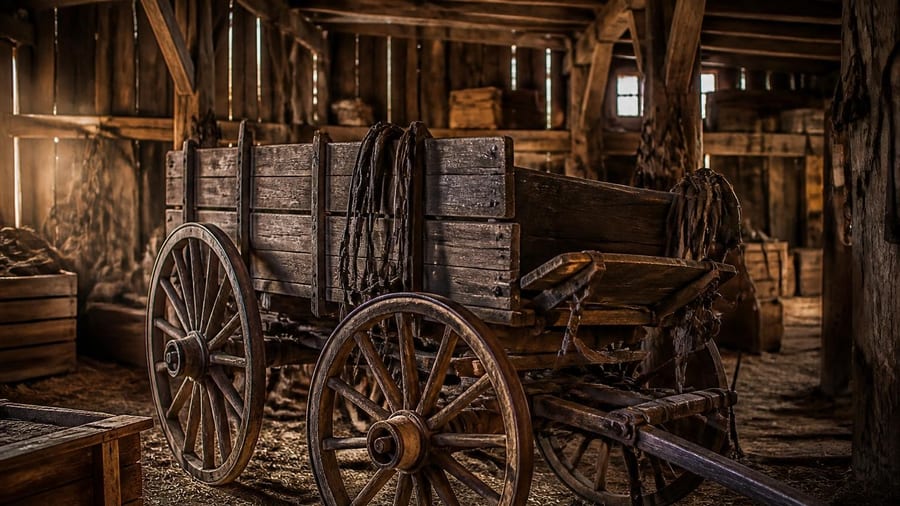
When the automobile officially emerged in 1886, one American moving company was already celebrating its fifth year in business. E.E. Ward Moving & Storage Co., founded in 1881 by John T. Ward and his son William, predates the patented horseless carriage and has quietly endured through 144 years of industry transformation, economic upheaval, and technological revolution. Today, the Columbus, Ohio-based firm operates a fleet of 45 trucks and employs 75 people, standing as a testament to adaptability in an era when most nineteenth-century enterprises have long vanished.
The company's longevity places it in rarefied air among American businesses. Few firms founded before the Civil War survive into the twenty-first century, and even fewer have maintained continuous operation through the horse-drawn era, the rise of motorized transport, two world wars, the Great Depression, and the digital age. E.E. Ward's story offers a window into how small businesses navigate seismic shifts in technology and market conditions while preserving core values.
From Underground Railroad to Interstate Commerce
The Ward family's entrepreneurial roots trace back to an era when Ohio was a critical corridor in the Underground Railroad network. John T. Ward, an African American entrepreneur, launched his moving operation from a single stop on that historic route, hauling household goods with two horses and one wagon. The business model was straightforward: residents and businesses in Columbus needed reliable transportation for furniture, equipment, and personal belongings, and Ward provided muscle, trustworthiness, and punctuality.
For more than a century, E.E. Ward remained under family stewardship. The company passed through four generations of Wards before Eldon Ward, John's great-grandson, sold the operation in 2001 to Brian and Dominique Brooks. This transition marked the end of 120 years of direct family ownership but preserved the company's mission and its distinction as the oldest African American-owned business in the United States at the time of sale.
The Slow Goodbye to Horsepower
While Karl Benz and Gottlieb Daimler were perfecting internal combustion engines in Germany during the mid-1880s, E.E. Ward's horses were already well-established on Columbus streets. The company didn't retire its last horse until 1921—a full four decades after founding and 35 years after the automobile's debut. By that point, the Ford Model T had been in mass production for over a decade, and motorized trucks from manufacturers such as Mack, International Harvester, and GMC were becoming standard equipment for commercial haulers.
This gradual transition reflects broader patterns in American industry. Rural areas and smaller cities clung to horse-drawn transport well into the 1920s, partly due to cost, partly due to infrastructure limitations, and partly due to the proven reliability of equine labor. For a moving company, the switch required capital investment in vehicles, training for drivers, and reconfiguration of maintenance operations. E.E. Ward's 40-year reliance on horses wasn't backwardness—it was pragmatic business management.
The transition from horse-drawn wagons to motorized trucks represented not just a change in equipment, but a fundamental shift in the speed, range, and scale of American commerce.
A Fleet Evolves Across Generations
Photographic records from the mid-twentieth century show E.E. Ward's fleet mirroring the dominant truck designs of each era. A 1951 image captures four American-made trucks, including several Dodge B-Series models produced between 1948 and 1953, alongside an older W-Series Dodge dating to 1940. These were workhorses of the postwar boom, capable of handling residential moves and light commercial freight with newly refined inline-six engines and improved cargo beds.
By the late 1970s and early 1980s, the company had adopted European cab-over-engine designs, including a Mercedes 'NG' truck. This shift reflected the diesel fuel efficiency and maneuverability advantages that European manufacturers engineered into their commercial vehicles during the oil crisis years. Cab-over designs, with the driver positioned above the front axle rather than behind a long hood, offered tighter turning radii—a valuable asset for navigating residential neighborhoods and urban loading zones.
| Era | Primary Vehicle Type | Key Advantage |
|---|---|---|
| 1881–1921 | Horse-drawn wagons | Low operating cost, proven reliability |
| 1921–1950s | Early motorized trucks (Mack, Ford, GMC) | Greater range and speed |
| 1950s–1970s | American mid-century trucks (Dodge B/W-Series) | Standardized parts, robust cargo capacity |
| 1980s–2000s | European cab-over-engine designs | Fuel efficiency, urban maneuverability |
The Business of Staying in Business
Longevity in the moving industry requires more than good trucks. It demands consistent customer service, careful risk management, and the ability to scale operations to match economic cycles. Moving companies face seasonal demand fluctuations, rising fuel costs, driver shortages, and intense competition from both regional rivals and national chains. E.E. Ward has navigated these challenges by maintaining a reputation for reliability and by diversifying services beyond simple residential moves to include commercial relocations, warehousing, and specialized transport.
The Brooks family's stewardship since 2001 has preserved the company's historical identity while modernizing operations. In an industry increasingly dominated by corporate consolidation and venture capital-backed startups, E.E. Ward's independence is notable. The company remains rooted in Columbus, serving a regional market rather than chasing nationwide expansion—a strategy that has allowed it to maintain deep community ties and a stable workforce.
Looking Toward the Next Century
As the moving industry confronts new pressures—driver retention, environmental regulations, and the rise of gig-economy labor models—E.E. Ward's trajectory offers lessons in adaptability. The company has already survived the transition from animal power to gasoline, from gasoline to diesel, and from mechanical to electronic systems. The next evolution may involve electric or hydrogen-powered trucks, which several major manufacturers are developing for commercial fleets.
California and several East Coast states have enacted regulations phasing out new diesel truck sales by the mid-2030s, a policy shift that will ripple through the logistics sector nationwide. For a company that took 40 years to retire its horses, a decade to electrify a fleet may prove manageable. The fundamental challenge remains the same: moving people's belongings safely, efficiently, and affordably, regardless of what powers the wheels.
- Founded in 1881, five years before the automobile's invention
- Operated with horse-drawn wagons until 1921
- Transitioned through American postwar trucks to European cab-over designs
- Maintains a fleet of 45 trucks and 75 employees today
- Represents one of the oldest continuously operating businesses in U.S. history
This article provides historical and business context for informational purposes. Readers considering moving services should evaluate providers based on current licensing, insurance, and customer reviews.