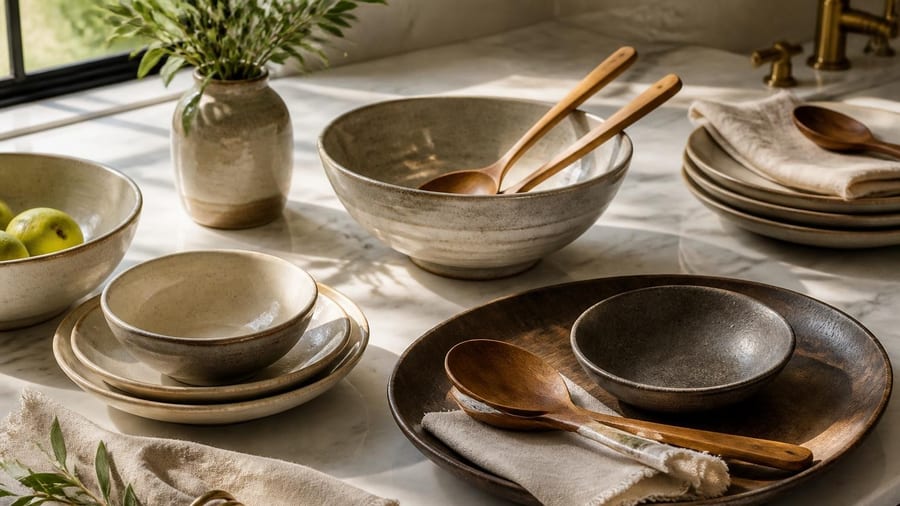
Discount home goods chains have become unexpected hunting grounds for shoppers seeking designer aesthetics without the luxury price tag. While high-end retailers command premium prices for kitchen essentials, savvy consumers are discovering that similar styles often appear at off-price stores for significantly less money.
The value proposition is straightforward: a shopper can find porcelain, glassware, textiles, and utensils that mirror the design language of upscale brands, but at 50 to 75 percent lower cost. This pricing gap has fueled a growing trend in home décor shopping, where the hunt for "dupes"—industry shorthand for duplicate aesthetics—has become a sport in its own right.
Tableware That Mimics Designer Collections
Dinnerware represents one of the clearest opportunities for cost savings. Botanical-themed porcelain mug sets retailing for around $20 echo the aesthetic of similar collections sold at boutique home stores, where individual mugs can command $15 or more. The difference lies not in the materials—both use dishwasher-safe porcelain—but in branding and distribution channels.
Glassware follows a similar pattern. Icon glass sets featuring playful summer motifs sell for roughly $15 for a set, compared to $8-12 per glass at specialty retailers. The lowball shape suits cocktails and casual dining, while the decorative artwork adds visual interest to table settings.
Discount retailers source overstock, closeouts, and private-label items that allow them to undercut traditional retail pricing by significant margins, creating savings opportunities for consumers willing to shop off the beaten path.
Salad plate collections in botanical prints offer another entry point. A set of four porcelain plates typically costs under $25, providing versatility for appetizers, desserts, and side dishes throughout the year. The durability of porcelain—combined with dishwasher-safe construction—makes these items practical for everyday use rather than special occasions only.
Serveware and Entertaining Essentials
Tiered serving platters at premium home stores frequently exceed $50, but budget alternatives appear at discount chains for $30 or less. These pieces typically feature decorative motifs such as lemon trees or scalloped edges, adding visual appeal to cheese boards, hors d'oeuvres, and dessert displays.
Table linens provide another avenue for savings. Linen cocktail napkin sets—inherently luxurious due to the material—retail for around $20, compared to $30-40 at specialty stores. Machine-washable construction ensures practical maintenance despite the upscale appearance.
- Two-tiered serving platters with decorative motifs
- Machine-washable linen cocktail napkins
- Handmade table runners with floral embroidery
- Porcelain serving dishes with botanical prints
Table runners with handmade embroidery or appliqué details offer a finishing touch to dining tables. These textiles, often priced between $25 and $35, replicate the crafted look of items selling for double that amount at boutique retailers. The key difference lies in production scale and brand positioning rather than material quality.
Kitchen Tools and Functional Items
Beyond decorative pieces, functional kitchen tools present substantial savings opportunities. Teakwood utensil sets—an eco-friendly alternative to plastic or silicone—retail for approximately $25 for six pieces. Comparable sets at high-end cookware stores can reach $110, a price gap driven largely by brand premium and retail overhead.
Teakwood offers several practical advantages: it's lightweight, gentle on nonstick surfaces, and naturally resistant to stains and odors. The material requires minimal maintenance—hand-washing and occasional oiling—making it accessible for everyday cooking rather than display-only status.
Stainless steel flatware sets provide another clear value comparison. A 20-piece set including forks, spoons, and knives typically costs around $50, compared to $100-150 for similar patterns at traditional retailers. Decorative details such as marble patterns or brushed finishes add visual interest without premium pricing.
Textiles for Kitchen and Dining
Kitchen textiles represent a category where design trends appear quickly at discount retailers. Floral-print aprons with adjustable ties and large pockets retail for approximately $17, compared to $48 at boutique stores. The three-to-one price ratio allows shoppers to purchase multiple patterns for the cost of a single designer piece.
Functional features matter as much as aesthetics in this category. Adjustable neck and waist ties accommodate different body types, while oversized pockets hold phones, recipe cards, and reading glasses. These practical details appear consistently across price points, suggesting that material quality and construction methods differ less than retail positioning might imply.
| Item Category | Discount Price Range | Designer Price Range | Savings Percentage |
|---|---|---|---|
| Porcelain Mugs (set of 4) | $15-25 | $40-60 | 50-60% |
| Teakwood Utensils (6-piece) | $20-30 | $90-120 | 70-75% |
| Linen Napkins (set) | $15-25 | $35-50 | 50-60% |
| Serving Platters (tiered) | $25-35 | $50-80 | 40-60% |
The Economics of Designer Dupes
The price gap between discount and luxury home goods stems from several factors. Brand recognition commands a premium, as does retail real estate in high-traffic shopping districts. Marketing budgets, catalog production, and customer service infrastructure all contribute to higher price points at traditional retailers.
Discount chains operate on a different model. They purchase excess inventory, closeouts, and private-label goods manufactured to similar specifications but without brand markup. The treasure-hunt shopping experience—where inventory changes frequently and availability varies—allows these retailers to maintain lower overhead and pass savings to consumers.
Quality differences exist but are often narrower than price gaps suggest. Materials such as porcelain, stainless steel, and natural wood behave similarly regardless of brand. Construction methods for tableware and kitchen tools follow industry standards. The primary variables are design details, packaging, and the intangible value of brand association.
Strategic Shopping Considerations
Shoppers pursuing this strategy should understand several practical realities. Inventory at discount retailers rotates frequently, meaning that specific items may not restock once sold. This creates urgency but also requires flexibility—finding an exact match for existing pieces can be challenging.
Quality inspection matters more when shopping off-price. Check for chips, cracks, or manufacturing defects before purchase. Return policies tend to be generous, but verifying condition at the register saves time later.
- Inspect items carefully for manufacturing defects
- Understand that inventory rotates and may not restock
- Compare dimensions and specifications, not just aesthetics
- Consider mixing high and low price points strategically
Mixing price points can be a strategic approach. Investing in high-quality cookware or chef's knives where performance matters, while choosing budget-friendly options for decorative tableware and textiles, allows shoppers to allocate resources based on functional priorities rather than uniform brand loyalty.
Seasonal timing affects availability. Spring and fall merchandise transitions often bring expanded home goods selections, while post-holiday periods may feature clearance pricing on seasonal items. Visiting stores regularly—or checking online inventories—increases the likelihood of finding specific styles or colors.
This information reflects general shopping trends and product availability; specific items and pricing may vary by location and time.