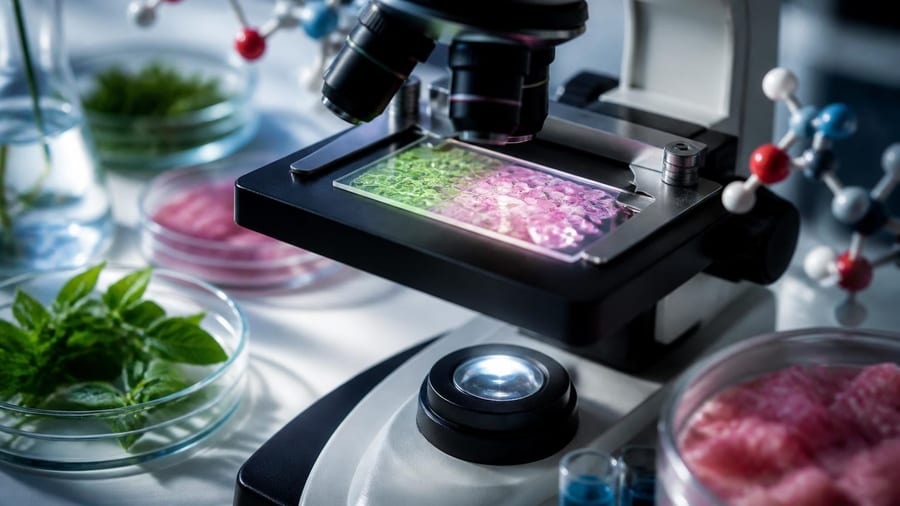
For nearly a century, biologists divided the world into neat categories: plant hormones belonged to plants, animal hormones to animals. Cytokinins, a class of growth-regulating compounds discovered in the 1950s, were textbook examples of botanical exclusivity. These molecules orchestrate cell division, root development, and leaf senescence across the plant kingdom. Yet recent laboratory findings reveal that mammalian tissues also harbor functional cytokinins, forcing scientists to reconsider fundamental assumptions about biochemical boundaries between kingdoms of life.
The presence of plant-associated hormones in animal systems is not entirely without precedent—researchers have documented trace phytochemicals in human blood after dietary consumption—but active biosynthesis and signaling represent a different order of discovery. Early mass-spectrometry studies identified cytokinin-like compounds in mammalian urine and serum, yet contamination from food sources clouded interpretation. Advanced isotopic tracing now confirms that mammals synthesize cytokinins endogenously, independent of dietary intake, a revelation that challenges the categorical thinking embedded in undergraduate biology curricula.
Biochemical Pathways Cross Kingdom Lines
Cytokinins derive from adenine, a nucleotide base universal to DNA and RNA. In plants, the enzyme isopentenyl transferase modifies adenine with an isopentenoid side chain, creating the cytokinin scaffold. Mammalian genomes encode analogous transferases with overlapping substrate preferences, originally studied for their role in transfer RNA modification. When these enzymes act on free adenine pools rather than bound tRNA, they generate molecules structurally identical to plant cytokinins.
Researchers at major US universities have mapped cytokinin distribution across rodent organs, finding the highest concentrations in liver, kidney, and immune tissues. Liquid chromatography coupled with tandem mass spectrometry reveals multiple cytokinin isoforms, including trans-zeatin and isopentenyladenine, in concentrations ranging from nanomolar to low micromolar—sufficient to trigger biological responses. The spatial patterns suggest tissue-specific synthesis rather than passive accumulation, implicating these compounds in mammalian physiology.
Potential Roles in Immune and Metabolic Function
While botanical cytokinins regulate cell proliferation and differentiation in meristems, their function in mammals remains speculative. Preliminary cell-culture experiments show that exogenous cytokinins modulate cytokine production in macrophages, hinting at immune-regulatory roles. Other studies link cytokinin exposure to altered glucose metabolism in hepatocytes, raising questions about endocrine cross-talk.
- Immune cells treated with cytokinins show altered interleukin-6 and tumor necrosis factor-alpha secretion patterns.
- Hepatocyte cultures exposed to trans-zeatin exhibit shifts in glycogen storage and lipid droplet formation.
- Neuronal cell lines demonstrate cytokinin-responsive changes in oxidative stress markers.
- Adipose tissue samples contain cytokinin-degrading enzymes, suggesting active turnover pathways.
These observations remain correlative rather than causal. Establishing physiological necessity requires genetic models—knockout animals lacking cytokinin biosynthetic enzymes or receptor homologs. Such tools are under development in multiple laboratories, with initial phenotyping expected within the next two years. If mammals prove unable to compensate for cytokinin deficiency, the hormones may join the ranks of established signaling molecules rather than remaining biochemical curiosities.
The discovery forces us to rethink the evolutionary origins of hormonal signaling systems and whether the plant-animal divide is as rigid as textbooks suggest.
Evolutionary Implications and Shared Ancestry
The shared use of cytokinins across kingdoms raises evolutionary questions. One hypothesis posits that the last common ancestor of plants and animals—a single-celled eukaryote living over 1.5 billion years ago—already employed cytokinins for cell-cycle regulation. As lineages diverged, plants elaborated the system into a central developmental toolkit, while animals reduced or repurposed it. Alternatively, convergent evolution may have independently recruited similar chemistry for unrelated functions, a phenomenon seen with steroid hormones across taxa.
Comparative genomics supports the ancient-origin model. Enzymes capable of cytokinin biosynthesis appear in algae, fungi, and certain bacteria, suggesting the pathway predates multicellularity. Transfer RNA modification—the primary role of these enzymes in animals—may represent the ancestral function, with free cytokinin production emerging as a regulatory innovation. Phylogenetic analysis of transferase gene families could map the transitions, though incomplete fossil biochemistry limits definitive conclusions.
Implications for Medicine and Agriculture
If cytokinins influence mammalian health, pharmacological manipulation becomes conceivable. Synthetic cytokinin analogs already serve as crop growth regulators; repurposing them for medical applications would require extensive safety testing. Conversely, cytokinin antagonists might offer therapeutic value in conditions where excessive cell proliferation or immune activation proves harmful. The blood-brain barrier's permeability to these small molecules adds neurological disorders to the potential target list.
| Research Area | Current Status | Open Questions |
|---|---|---|
| Immune modulation | Cell-culture evidence | In vivo relevance, receptor identity |
| Metabolic regulation | Preliminary biomarker associations | Causal pathways, dose-response curves |
| Cancer biology | Tissue distribution mapping | Growth promotion vs. suppression |
| Neuroscience | Detection in brain extracts | Signaling mechanisms, behavioral effects |
Agricultural scientists are exploring whether dietary cytokinins from plant sources exert biological effects in livestock or humans. Fermented foods, legumes, and certain vegetables contain measurable cytokinin levels. Though gut absorption remains low, chronic exposure might accumulate or trigger adaptive responses. Epidemiological studies linking plant-rich diets to health outcomes rarely measure cytokinin intake, leaving this variable unexplored.
Research Frontiers and Methodological Challenges
Advancing this field demands improved analytical tools. Distinguishing endogenous mammalian cytokinins from dietary contaminants requires isotopic labeling studies in germ-free animals fed chemically defined diets. Receptor identification poses another hurdle—plants use histidine kinase receptors absent from mammalian genomes, implying alternative binding partners. Candidate screens have identified G-protein coupled receptors and adenosine receptor subtypes as possibilities, but definitive proof awaits co-crystallization or knockout validation.
Quantifying tissue-specific cytokinin concentrations in human samples presents ethical and technical obstacles. Minimally invasive biomarker studies using saliva, urine, or exhaled breath may circumvent biopsy requirements. Longitudinal monitoring during disease progression or dietary interventions could reveal functional significance without mechanistic certainty. Such population-level data would guide more invasive laboratory investigations.
This information does not replace advice from a qualified professional. Readers with health concerns should consult licensed medical practitioners before altering diet, medication, or treatment plans based on emerging biochemical research.